
Wild Edible Foraging
Wild Edible Foraging
With the arrival of spring comes many long-awaited activities for any outdoors enthusiast, like hiking, fishing, and turkey hunting. There is another short-lived activity that gets some of us out wandering around in nature. This is the adult version of an Easter egg hunt, and it’s called foraging. Foraging for wild edibles has been practiced for thousands of years for survival, and while this is not the main motive for the activity in modern days, I’m sure the thrill remains the same. There is just something exhilarating about walking up on that jackpot patch of morel mushrooms that no one else has managed to find yet.
Finding the First Morels
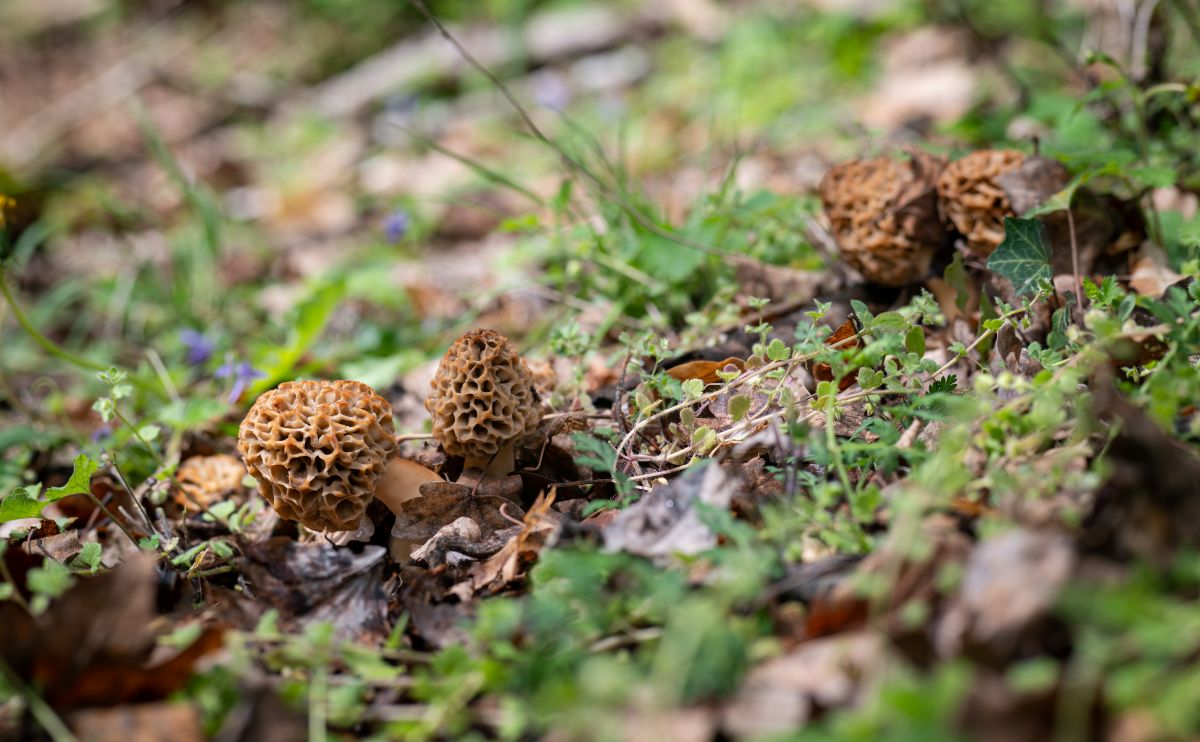
This reminds me of a day in late April many years ago. My boy and I were out enjoying the warm weather by taking a ride in the side-by-side. He was 10 at the time, and we were having a great time racing through the trails, up and down hills, and around the trees. We were headed down a short hill when I saw them. Two morels next to each other, right on the trail’s edge. So, we did what any mushroom hunter would do. Collected the two and started to scour the area. It didn’t take us long to find more.
We followed the trail of treasures down a small ravine. As he was cutting the morels and running out of room to hold them, I suggested that he throw some up to me. That first shot was over my head and landed right in the middle of a pile of fresh, medium-sized greys coming out of the ground. We had a quick little celebration and filled up the bag.
That spot is now named Isaiah’s Jackpot and still gives up at least a few mushrooms every year.
Two of the most sought-after wild edibles in Iowa during the spring are asparagus and morel mushrooms. While asparagus is easy to grow in a garden, the morel is the exact opposite. There are kits online you can try with varying results, but because of the mysterious nature of this mushroom, it is rare to get any type of consistency.
Morel mushrooms can really drive a serious forager mad at times. It’s such an addiction that some people will drive hundreds of miles just to get that first one. I think what makes these mushrooms so special is simply the lack of availability. The season is short-lived, there is no real good indication of exactly where they will show up, and as soon as they do, it seems like they just disappear again.
There are some clues, though, and I’ll see if I can help make it a little easier. At one time long ago, I used to be crazy about morels. I’d start in March and physically go out in the woods, check soil temps, look for signs of first growth of plants around, and log all of that information. I always wanted to be the first one in my county to find one. Completely obsessed with morels.
From my findings, this is what I can tell you. For a decent-sized bag of morels, I don’t start looking until the third week in April. It’s a pretty safe bet after the many years of logging finds. Morels almost always grow in the same area, but not always in the exact same spot. It’s almost like the colony travels each year seeking out nutrients for the mycelium to feed on. This mycelium grows underground and has a symbiotic relationship with trees.
It will attach to the roots of trees and shrubs, protecting the roots, absorbing water and nutrients, all while feeding off the nutrients from the tree. This is why we find piles of mushrooms under a tree that has just died. The mushroom is the fruiting body of this mycelium and has detected a change in the provided nutrients, therefore sending out spores to move the colony. That is the short version, of course, but this helps us understand why this fungus is so elusive.
Dying trees are more important than dead trees when seeking out morels. Elm, Ash, Cottonwood, and Tulip trees are all good indicators of possible morel finds in Iowa. Once you find the first one, make sure to stay still, get low, and scan a ten-foot radius around you carefully. 90% of the time, there are more around, and it pays to slow down. In the early part of the season, look for areas that warm quickly.
A great way to find these areas is simply to look for the first signs of life, such as flowers, weeds, and the first little leaves on shrubs. They will all be present at the right time. South-facing hillsides near the top would be the first place I’d start. When you start finding enough to need a bag, any type of bag you choose will do. This is a heavily debated topic, but I’m just going to give the facts here.
You cannot think of morel spores as comparable to seeds, as far as how they are distributed. Spores are microscopic, and they do not fall to the ground. Even a very slight breeze can carry them miles, so a plastic bag will not prevent them from being distributed wherever the wind blows in a literal sense. However, there is a good reason to use some type of breathable bag. In order to keep your bounty as fresh as possible and safe, I would advise a decent perforated bag or a backpack. Preferably something that won’t get caught on sticks and thorns. This will make your hunt more enjoyable.
Also, I’d suggest jeans, long-sleeves, and tick repellent. Camo is great for blending in, but bright colored clothing will help you see ticks. Choose wisely. Tucking jeans into your socks may look goofy, but it will keep some bugs from getting under your clothes.
Roadside Asparagus
Asparagus is a very readily available and easy-to-find wild edible in Iowa. Mid-April to mid-June is when to find it, with the peak season being in May. Almost all Iowa roadside ditches will have some available if you travel far enough. Even given the availability of wild asparagus, there’s no guarantee that it will be there when you venture out to gather some. This is because there are many other foragers out there that know about the same patches that you do. The early bird gets the worm in this case, and I would suggest checking early as well as often.
Try to avoid areas that have recently been sprayed with herbicides. Preferably, harvest the tasty spears before the top opens up. Snap or cut the spear right at the base, and continue to check the patch every few days, as the new spears will appear and grow very fast. Harvesting them when they are 8-10 inches, in general, will provide the most tasty and tender meal. If they get too big and start to flower, they will be tough and woody. Sometimes I’ll even eat them raw as a snack while gathering them. Something to keep in mind for the next season is that asparagus patches are really easy to find in the fall.
Look for the big patches of thin wispy foliage that are yellow or brown in color, and make a note of exactly where they are for the following year.
What works best for my household is to have a little bit of asparagus planted in the garden for convenience’s sake, and to forage for the rest of it when I can make the time. Of course, if you are not able to get out on your own and know some foragers, most of us are usually happy to share.
Buy Local
Another option for acquiring fresh wild edibles is to buy them, of course. Buying locally is always encouraged, and prices vary greatly according to availability. My advice when buying mushrooms, though, is to find someone who is reputable for being able to identify morels properly. The state of Iowa requires completion of a Wild-Harvested Mushroom Certification workshop in order to legally sell them in Iowa.
Now that you’ve got a bag of asparagus and a bag of morels, it’s time to eat. There are so many ways to enjoy these wonderful finds that I couldn’t list them all. For my family, asparagus is simple. Steamed, melted butter, salt, and pepper. Add bacon to make it savory. Morels, we stick with the standard. Crushed cracker (half Ritz, half Saltine) seasoned well, coated in egg, and fried in butter. My son is 14 now and can really throw down on the flat iron, so he fries up our mushrooms. If you happen to get the chance to put these two on a plate along with some fresh fried fish, you will have the pleasure of eating the best Midwest trifecta meal of the season. Enjoy!
May 2026
By Geoff Taylor