What is Tip-Up Fishing?
What is Tip-Up Fishing?
The sight of countless flags and indicators splashing color across the white expanse of the ice is one of my favorite things about ice fishing the Iowa Great Lakes. It’s a sight to see when you get a big group of dedicated fishermen fishing with tip-up lines. To me, this is the best time of winter.
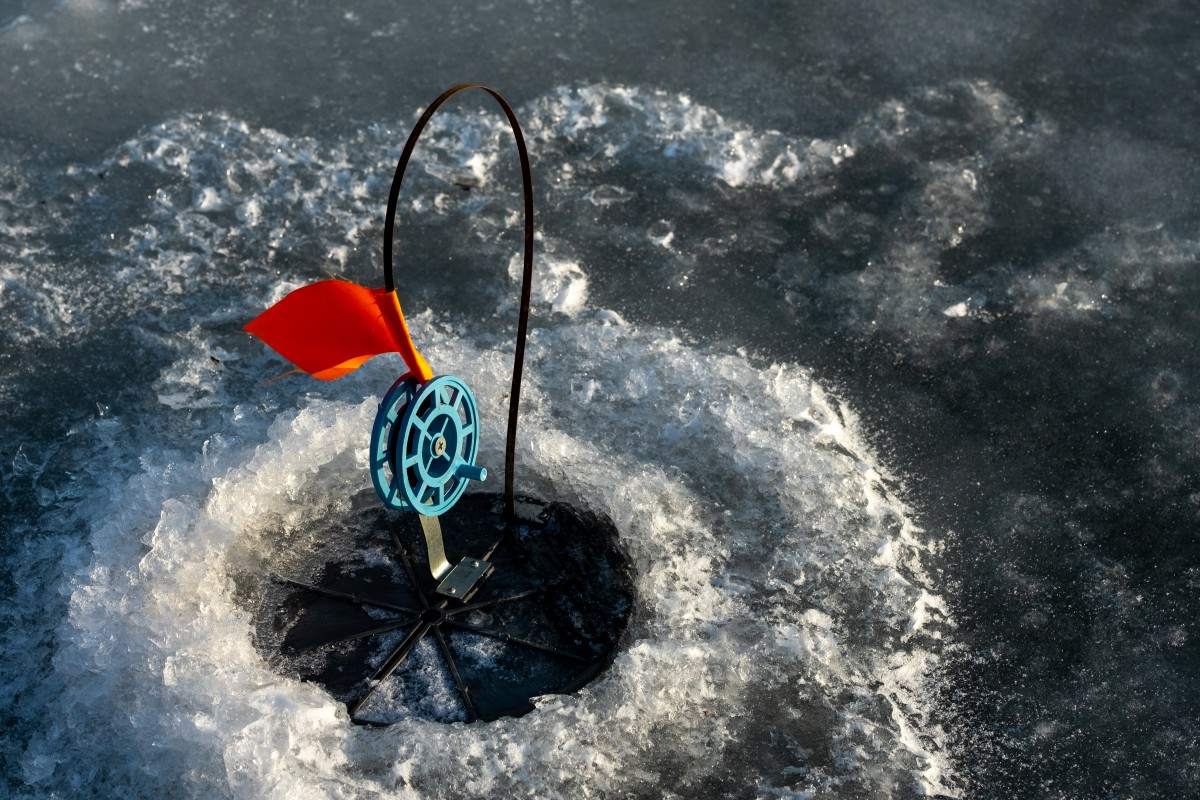
If you’re reading this, and you’re not sure what I’m talking about, let’s start off by explaining what tip-up fishing is. The basic idea is that it acts as a simple alarm system for your fishing line in the ice. First, you drill a hole and put the device over it, lowering your baited line to the right depth. A trigger mechanism holds a little bright flag down until a fish grabs the bait.
When a fish bites and swims off, it releases the trigger, making the flag “tip up” into the air so you can see it from far away. Then you just run over, and reel the fish in. Most tip-up rigs do not have reels, so you pull it in by hand. It’s really pretty straightforward and a fun way to fish! You’ll see groups of fishermen on the ice, pointing at flags, ribbing each other and enjoying each other’s company
Fishing Tip-UP
When it comes to fishing tip-up, you need to first begin with being familiar with the rules and regulations. According to the 2026 Iowa DNR Iowa Fishing Regulations, “You may fish a combination of one tip-up and one additional line, or two tip-ups and no additional lines. You can use an additional line or tip-up if you have a third line fishing permit.” When it comes to fishing the Mississippi, Missouri and Big Sioux Rivers and their connecting backwaters, there are a different set of rules and regulations, so make sure you know the rules wherever you’re going.
Gear
When it comes to baiting your tip-ups, minnows are generally your best and most popular choices, working great for walleye, perch, and crappie. In my experience, walleye seem to especially love live suckers and shiners. If you’re after big, toothy critters like northern pike or lake trout, dead bait works really well. You aren’t limited to just fish, though. Worms and nightcrawlers can land you good catches. All these different baits help you target specific fish and effectively set up your lines for a fun-filled day on the ice.
When you start looking at ice fishing tip-ups, you’ll find quite a few different styles out there. You can get pretty simple mechanical ones, or more expensive ones are just to handle the cold better and come with smarter features. You’ll see the classic wooden cross-style first; these are really simple and cheap, but the hole you fish through tends to freeze over fast, and they aren’t the toughest.
Then there are the plastic flat-board kinds, which are pretty similar but fold up nicely for carrying. Stepping up in quality, you have the round and insulated designs to completely cover the hole to prevent freezing. Even in really harsh weather, and they also block out light so shy fish aren’t spooked. Beyond those, you get into specialized tip-ups that use the wind to jiggle your bait, and innovative rod holder tip-ups where you use your actual fishing rod to fight the fish, which many anglers really like.
What usually sets a cheap tip-up apart from a high-end one boils down to the materials used and those little things that make them easier to use. The better ones are built with tough, freeze-proof parts like aluminum spools and good quality plastics that won’t crack in extreme cold. They often have settings to adjust the tension, which is crucial so the flag doesn’t pop up every time a small minnow wiggles, or to make sure even a light bite triggers the alarm.
Premium models are typically more stable in the wind, sometimes with wider bases, and might have larger spools if you’re fishing in very deep water. Ultimately, the best one for you is one that consistently works well every single time you set it up. That reliability makes a big difference when you’re out in freezing conditions. So, get out, enjoy the weather, and you might consider adding a tip-up rig (or two) to your set-ups.
By Jacob Dean
February 2026
For Leading Dairy and Cattle Industry News: