
Hunting Rubs & Scrapes
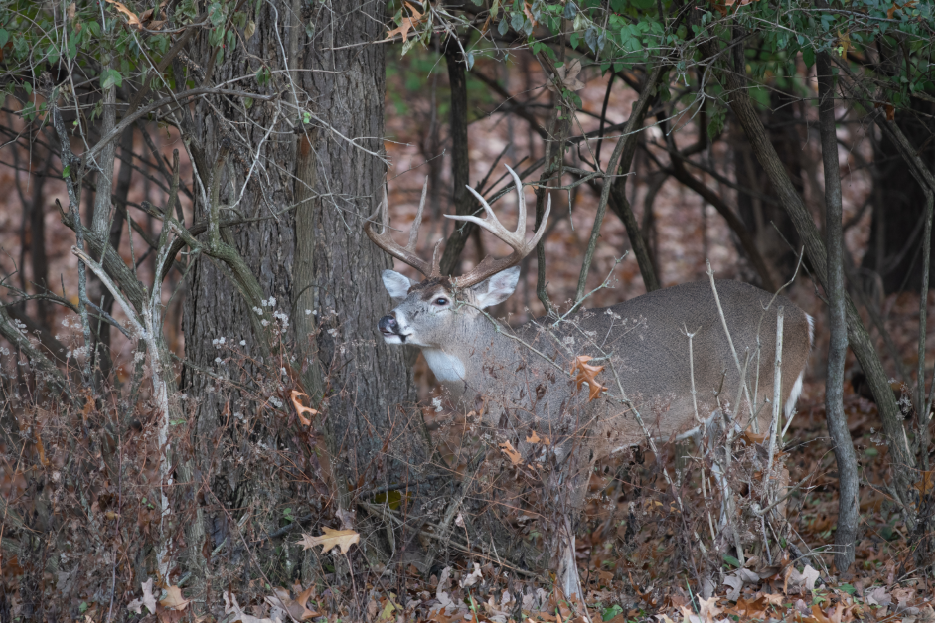
Unlocking the Secrets of Rubs & Scrapes
This fall, many hunters will come across fresh rubs and scrapes to and from their hunting locations. Learning how to read these signs can greatly improve a hunter’s odds of filling a tag on a mature buck. Oftentimes, these signs are more than a single signpost and instead are part of a large communication network. Scrapes are different than rubs, so both need to be studied to understand the way deer work these two types of communications.
Deciphering Rubs
Rubs are easier to see from a distance, as fresh bark peeled away from trees stick out like glow sticks in the timber. Bucks initially start rubbing trees to remove velvet from their antlers. Later in the season, bucks begin to rub trees to deposit scent from their forehead glands and establish dominance in their core territories. More studies continue to show that deer also use rubs to communicate visually. Whether the bucks identify rubs as a path to follow, set boundaries, or other various reasons continues to be studied.
Every rub isn’t created equal. There are random rubs, travel rubs, and boundary rubs. Random rubs are often found in the center of timber with no real transition line, topographical change, or any other significant reason for it being there.
Random rubs are often on larger trees, rubbed 365 degrees around the trunk, and are visited by multiple bucks to leave scent and “communicate” that they are in the area. Travel rubs are found along trails, drainages, and follow a consistent direction. Often travel rubs will appear on the same cardinal direction side of trees. Travel rubs are good indicators of a travel corridor one or several bucks are using. Boundary rubs mark the edges of bedding cover, food sources, or other noticeable transitions in terrain. These rubs deserve attention as they likely receive the most activity during the hunting season. Boundary rubs are used to show territory, and bucks visit them more often.
Iowa bucks tend to favor certain trees for rubbing. Any tree less than three inches in diameter is in danger. Bucks prefer trees with thin bark and strong scent, such as cedar, pine, elm, soft maple, and willow. Smaller trees make it easier for bucks to leave scent, while larger trees become more visible after the bark is stripped and are often used as visual markers. Bucks begin making rubs as early as August, when velvet shedding begins, and continue to rub until antlers fall off in late winter.
Secrets to Scrapes
Hunters are also likely to encounter scrapes, which are made during a shorter window than rubs. Bucks typically begin making scrapes in late September and may continue checking them through December. Bucks paw at the soil, leaving exposed earth under their hooves while snapping twigs, vines or branches directly above the worked-up area. Contrary to what most hunters believe, the licking branch above the pawed soil offers more information to a deer than the soil underneath. Here, bucks leave saliva and scent from their forehead and preorbital glands for deer that follow to read. Bucks not only communicate with other bucks but also does with scrapes.
Like rubs, there are different types of scrapes. Random scrapes are made by one buck, one time and may never be visited again. These usually disappear within a week or two after leaves blow over the disturbed earth. Bucks leave random scrapes to deposit bits of scent along an area during the pre-rut as they travel to and from food to cover and start to figure out where does are at and to let other bucks know they have moved in. Hanging stands over travel scrapes in early October can lead to daytime movement and get you within shooting distance of a mature buck before the rut action picks up.
How to Hunt Scrapes
Hunters looking to dial in stand location a little later in the season should try to identify community scrapes. Community scrapes are much larger and usually noticeable from a distance. Some community scrapes will be used year after year and visited periodically by multiple bucks. Placing a trail cam on one of these scrapes can offer a lot of information in a short amount of time. Bucks utilizing an area with a community scrape are likely to visit at least once per week. Finding a scrape like this toward the end of October can be money for finding a lot of buck activity right before does start going into heat.
Rather than find a scrape, you can create your own. Partially break off a branch so it hangs about even with your waistline. Deer aren’t as tall as you think, and once that tree loses its leaves, branches will lift throughout fall. You want that branch to hang about eye-level of the deer when you are hunting. Underneath that branch, take a rake or use your boot and work up the soil so there’s enough bare dirt, it’s noticeable from a distance. There are plenty of scents on the market that are legal in Iowa to add to the licking branch and soil. Purchasing some preorbital gland scent and sticking it on the broken off branch should be enough to draw some attention. Once deer start to visit it, you won’t need to add any more scent as they will begin naturally taking care of that.
Whether you find scrapes or create on your own, terrain is the most important factor when setting up to hunt them. Ridge tops, trail pinch points, and food plot edges are some of the best places to locate scrapes. High traffic areas near food sources are easy for deer to check on their way to dinner or bed. Make sure to set up downwind of the scrape for whatever wind pattern is favorable to the location. Bucks like to use scrapes at night, so the last few minutes of legal shooting light will often be your best bet to hunt these spots. I wouldn’t waste a whole day sitting over a scrape. Trail cameras will tell you if the scrape is active and what deer are in the area.
Putting It All Together
Take note of your farm’s terrain the next time you are out and try picturing where bucks may travel this fall. It is very likely that you may come across a few rubs and scrapes in the travel corridors. Set up strategically, but don’t focus on just one scrape. Try to read the signals the deer provide to understand their patterns. Knowing not just where, but why a buck created these signs will greatly improve your hunting strategy this fall.
Follow us on Facebook! The Iowa Sportsman | Facebook