Train Your Dog for Waterfowl Season
Train Your Dog for Waterfowl Season
Just to be clear, I am not a waterfowl hunter. That’s my reality for two reasons: time and connections – I choose to pursue different game during waterfowl seasons, and none of my buddies are avid waterfowlers.
Since we’re clearing the air, I’d like to make a couple of suggestions I think are universally true when it comes to training a dog to waterfowl hunt.
Train Them Yourself
First, all the behaviors your dog needs to do to be a successful waterfowl hunting partner start in your home. That responsibility is on you. If you want a steady, patient, controlled, obediently observant dog in the blind, you begin that foundation in the home and you consistently expect them to execute it.
Second, you don’t have to send your dog to a pro to help them become a waterfowl dog. You can, but you don’t have to. You just need to commit in three areas of your life: your time, your patience, and your resources (podcasts, articles, other dog owners, training groups, etc.)
The guidance I’m about to share is built off the two suggestions I just made. If the end goal is successful waterfowl hunts with your dog, you simply need to clarify what would make your dog be a part of that success. Another way of thinking of this is to ask yourself, “what behaviors does my dog need to execute to be a part of a successful waterfowl hunt?”
Build A Strong Foundation
We can all agree that focus and obedience are behaviors that are interwoven with any other behavior we expect from our dog. A behavior you likely won’t use when hunting waterfowl with your dog is healing. However, I still highly recommend incorporating healing into your dog’s foundation, because it helps you two to sync and it increases their obedience.
The necessary behaviors your dog will need to execute to play their part in a successful waterfowl hunt are: steadiness, unfazed by gunfire, retrieve, and swim. To learn more about gunfire introduction, check out last month’s Gun Dog article. Likewise, I’m not going to get into water introduction in this article, but we’ve covered it in past articles. There are two things I’ll mention. Even if your waterfowl hunting is primarily field goose hunts, having a dog that will swim and enjoys it is always helpful to have in their toolbelt. Also, having a dog that’ll swim gives you more training opportunities as you build mental and physical training sessions for them.
Steadiness
Steadiness starts at the food bowl. It can be built, expected, challenged (increase distractions), and executed getting in and out of the crate, while on place, walking through doorways, meeting people, during retrieves, etc. Steadiness can be a part of our normal routine; it doesn’t have to only be a part of training sessions. It is both a link in the chain of our dog’s foundation, but it’s also its own chain we can build and strengthen. Steadiness isn’t a command we give our dog; it’s a behavior we help them master. If we’re impatient, inconsistent, and using words to build this behavior, our dogs will struggle. Steadiness doesn’t take years to build. It simply takes commitment, patience, and consistency.
Retrieve
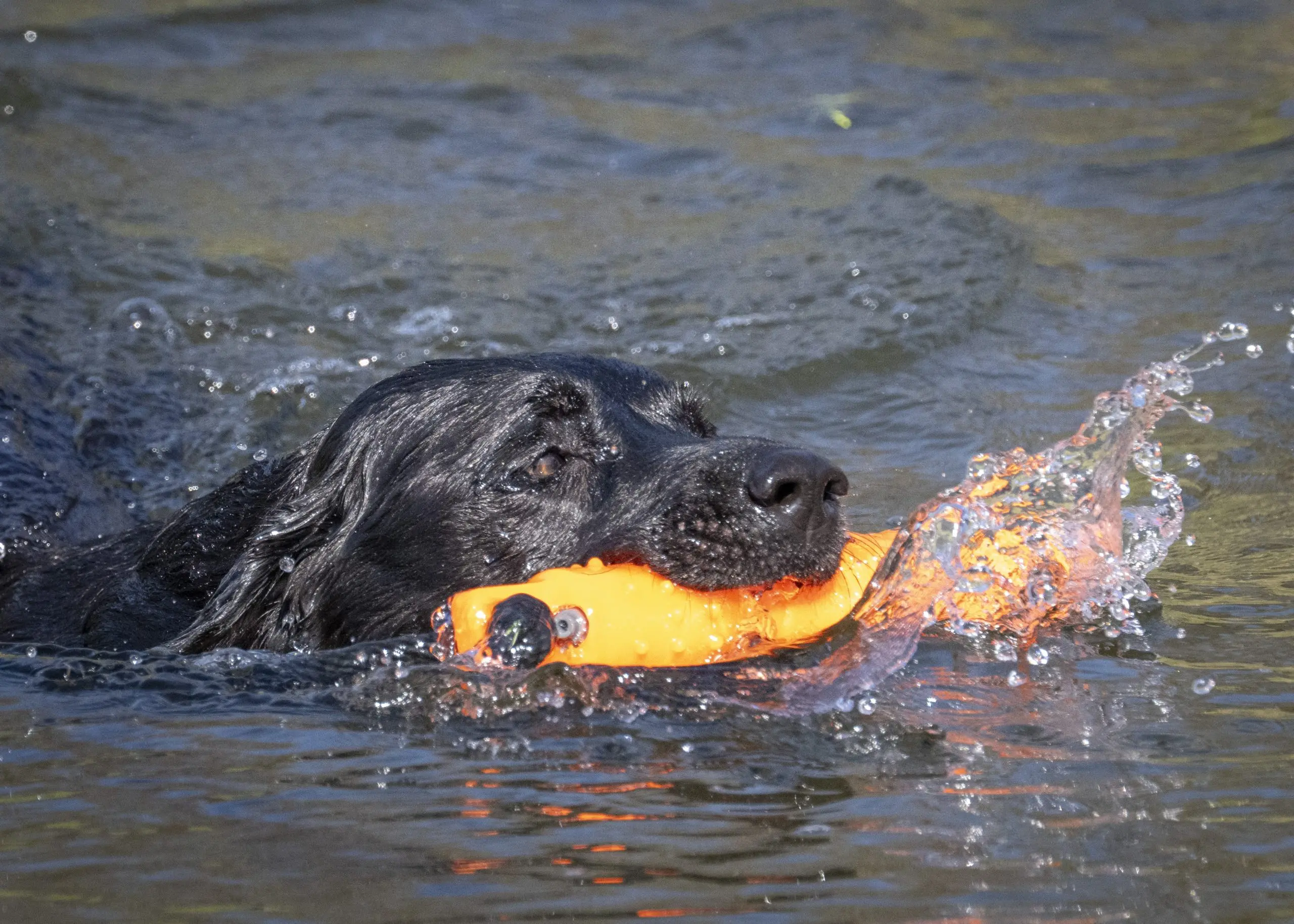
Retrieve is more than our dogs picking something up and bringing it to us. A retrieve consists of four parts: going out, picking up the object (bird/bumper), clean hold, and returning.
For a waterfowl dog, there are some additional pre-retrieve behaviors that pair and impact their retrieve. Before we send our dog on a retrieve, they need to be steady and focused so they can make a good mark and make the right move when we send them. If they aren’t steady, things can and likely will go awry. They’ll break before we send them and miss marking the other birds we dropped. Also, they’ll put themselves in harm’s way. They’ll startle the incoming birds. If they are steady, they’ll make good marks. That’s why steadiness is so key.
Being able to handle our dog during retrieve is a behavior that can help us help our dog work through a difficult retrieve. Teaching our dog to look back and/or sit at a whistle, cast left, right, and back will help them locate game they are struggling to find, especially when conditions are tough and/or they had to make multiple marks.
You’ve got a goal. Build a plan. Lean into your resources. Stay committed. Enjoy the journey.
Follow us on Facebook! The Iowa Sportsman | Facebook