
Tactics for Late-Season Toms
Tactics for Late-Season Toms
The warm spring air felt a little chilly but good as I approached the area I was going to turkey hunt in the dark, well before sunrise. The dew was on the grass, and I headed towards an open field with rolling hills and timber nearby.
Be Observant
There were plenty of roosting trees and oak trees in this timber, so it had reliably held turkey. The first part of a promising turkey season was to pay attention where I’ve seen turkey through out the year, particularly in the spring. I also pay attention to where oak trees are and turkey droppings. You need to be where the turkey are. So, with previous knowledge and some scouting, I had high hopes for fourth season success.
I was tucked into the edge of a timberline looking out in a pasture where they like to strut and feed. It was fourth season, and the landscape looked different now. What had been bare and open just a few weeks earlier was filling in fast with new growth. The understory was greening up, grass pushing through, and visibility shrinking by the day. This also meant turkeys had more places to disappear.
Jake or No Jake?
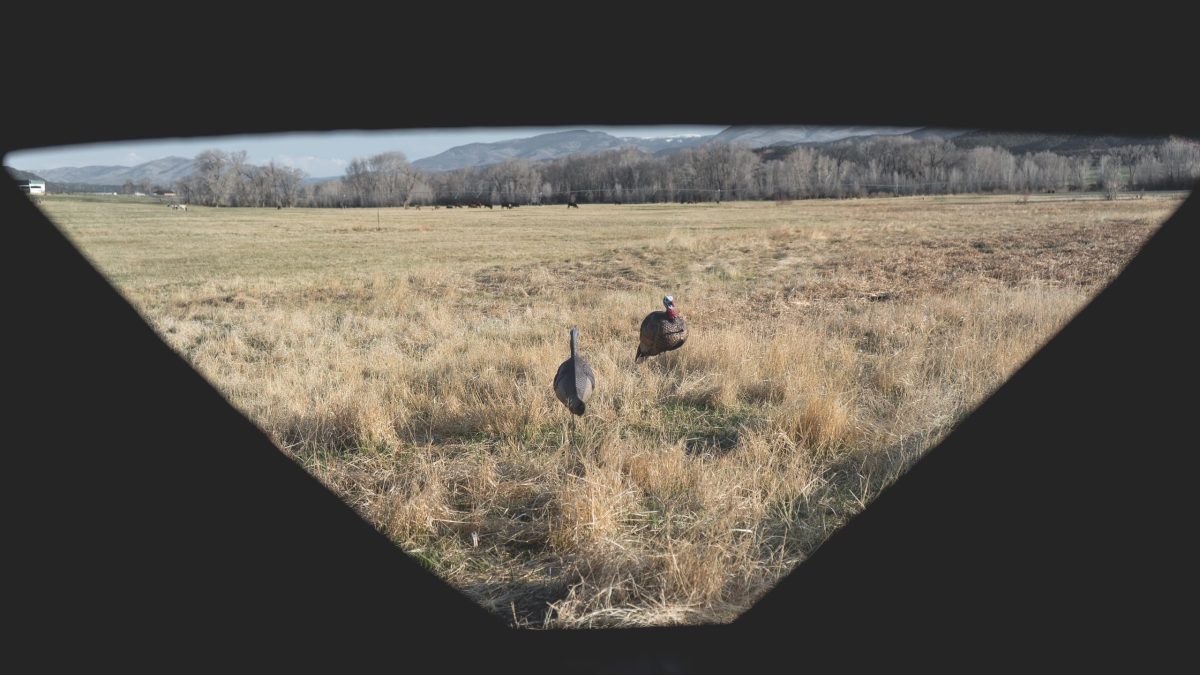
I eased into position with a Red Oak tree to my back, and some multifloral rose in front of me and got my decoys set. This time of year, I always debate on whether I should use a jake decoy along with two hens. I like to use realistic looking decoys, and love the set that I have. If your decoys are looking worn and barely resemble a turkey anymore, you should probably consider replacing them.
Decoy placement becomes even more important when visibility is limited. I like to set my hens in an open pocket where they can be seen from a distance, but with enough cover around me to stay hidden. Always think about how a bird will approach. Positioning hens slightly off to one side can help pull a bird past your setup, giving you a better shot angle.
Late-season gobblers love to circle. They’ll use the terrain to their advantage, trying to verify what they’re hearing and seeing before committing.
Anyways, on this hunt, I decided to forego the jake so I wouldn’t scare off battle-worn toms, and I set up my two hens, nothing more. No jake. Early in the season, a jake decoy can be just the thing to trigger a dominant tom, but late season sometimes it is a different story. By now, most of the fighting has already been settling down. The pecking order is established. The birds that are still alive didn’t get that way by being reckless.
Bring Multiple Calls
The sun was just lightening up the sky. The song birds were singing, two hoot owls were calling to each other, and I had heard a few gobbles off in the distance.
This time of year, I like to carry at least two calls. I have found that toms can get a little hung-up and sometimes switching calls can give that tom the encouragement to come in.
I yelped soft on a slate, just enough to let him know there was a hen nearby.
He hammered back immediately.
“Alright,” I thought. “Game on.”
This wasn’t my first time trying to call in a late-season gobbler.
He gobbled again, but he didn’t close the distance.
I scratched in the leaves. Clucked once. Then went quiet.
Minutes ticked by. Then I caught movement.
I could see the top of his fan and hear the drumming. He was strutting on the backside of a hill and ready to crest it. He was using caution. He wasn’t looking for a fight. He was looking for a hen.
That’s exactly why those two hen decoys were out front.
If he was going to hang-up and stay 80 yards away strutting, I had my box call chalked and ready. Sometimes this can be just what a gobbler needs to bring him on in. I waited for a bit. His head turned redder, he squared up and began coming in. He was taking some deliberate steps my way, and then, he began to circle me.
Using every bit of cover that fresh spring growth provided, he eased his way downwind, trying to get a better look, trying to confirm what his ears were telling him. Late-season birds rely heavily on their eyes. They’ve been fooled before, and they’re not about to make the same mistake twice.
Know When to Be Quite
I stayed still. Didn’t call.
That’s another hard-earned lesson from running and gunning late in the season: sometimes the best call you can make is no call at all. These late-season gobblers can be finnicky. In the past, I have over-called, but one thing that I’ve learned is to be quiet and let the gobbler be curious. Hopefully, his curiosity will bring him in.
Aggressive, frequent calling might work early in the season when birds are fired up and competing. Late season, less is more. Soft yelps, clucks, and purrs are often all you need. You’re not trying to challenge a gobbler; you’re trying to convince him there’s an easy opportunity waiting.
He strutted once, half-heartedly, then dropped it and kept walking. No drumming, no spitting this time, just cautious, methodical movement. He wasn’t coming in hot. He was coming in smart.
At 40 yards, he stopped and stared.
The kind of stare that feels like it lasts five minutes but is probably only thirty seconds.
Then he took a few more steps, angling just enough to give me what I needed.
My gun was already up on my knee and the orange fiberoptic was covering his head.
The gun barked, and the turkey dropped.
Hunt the Afternoon
At this time, turkey behavior is shifting. Hens are starting to nest. Early in the morning, you’ll often see hens still active, feeding, moving, and occasionally vocal. As the morning wears on, many of those hens will slip off to lay or tend to nests. That leaves gobblers alone, and that’s when your opportunity window really opens up.
Too many hunters pack it in by mid-morning this time of year. The morning hunt worked for me this time, but if you think your hunt is over by 9:30 A.M., that’s a mistake.
Some of the best late-season action happens late morning into the afternoon. Once those hens peel off, toms are suddenly receptive again. They’re still interested, but now, they’re available. That’s when a well-timed setup can pay off big.
When I’m running and gunning late season, I’m constantly moving until I hear a gobbler fired-up. I walk, I stop and call, sometimes I’ll setup for a while. If nothing happens, then walk some more. Use cover and terrain so you don’t spook turkeys. In late season, that story often revolves around feeding patterns and travel routes rather than breeding flocks.
Be Thankful for the Time in the Timber
Late-season turkey hunting has a way of humbling even the most seasoned hunters. By the time you reach this stretch of the season, the birds that remain are educated, pressured, and operating on a different set of priorities than they were just a few weeks earlier.
Another overlooked tactic this time of year is patience. Running and gunning doesn’t mean rushing. It means moving with purpose, setting up quickly but thoughtfully, and then giving each setup enough time to play out. Late-season birds might take longer to respond. They might hang up. They might go silent.
That doesn’t mean they’re gone.
More than once, I’ve had a gobbler slip in without making a sound, drawn in by a subtle setup and a realistic decoy spread. If I had picked up and moved too soon, I would have bumped him without ever knowing he was there.
Late season has a way of rewarding the hunter who slows down just enough. Move when you need to. Sit when it counts. Call just enough, and pay attention to what the birds are telling you. When it all comes together, and a cautious old gobbler finally commits, there’s nothing in the spring woods quite like it.
May 2026
By Nathan Graham