
Smart Scouting Tools for Iowa Deer Hunters
Smart Scouting Tools for Iowa Deer Hunters
When I first started hunting, scouting consisted of going out to the timber with my dad, looking for deer paths, sign, tracks, and then reflecting on the data. Sometimes we’d hang a stand with the idea that we might have to move it. We relied heavily on woodsmanship skills in an era before cameras, before Google Maps, and when hunting was still pretty primitive.
Today, we have a bunch of different tools to help you scout, and if you’re planning on hunting Iowa’s public land across the state, you will find these tools useful. The counties across the state are full of hidden gems and opportunities to hunt. From Iowa Hunter Access Program (IHAP) land, to County Conservation Board managed area, urban hunting spots, and expansive public hunting areas, there are hundreds of acres tucked away and ready for you to explore.
For the busy hunter, these tools are invaluable. Yes, you still need to use your woodsmanship skills, but many of the scouting tools can help you get setup in a decent spot with a little bit of time and understanding. Deer hunting has changed a lot over the years. Today’s hunters have more tools than ever to scout smarter, hunt cleaner, and spend less time guessing. From digital maps and cellular trail cameras to high-end optics and wind-checking tools, technology can help Iowa hunters stay one step ahead of mature bucks. Still, no gadget replaces woodsmanship, patience, and a little luck. These tools simply help stack the odds a bit more in your favor.
Digital Maps
One of the biggest changes in modern deer hunting is digital mapping and scouting apps. Programs and software have become a favorite tool for many Iowa hunters. These apps help identify property boundaries, land ownership, terrain changes, bedding areas, travel routes, and food sources. Hunters can study topographic maps and satellite imagery long before they ever step into the woods. On public land, these tools are even more valuable because they help you avoid mistakes and hunt more efficiently.
Online maps, like Google Maps, Bing Maps, ArcGIS, and more are usually free and helpful. They can help you identify dark green cedar thickets, which are great bedding areas, and trails. I’ve actually used Google Maps to identify trails. Many hunters also use Google Earth to get a closer look at terrain too. The 3D view can reveal steep hills, hidden draws, bottlenecks, and natural funnels. Even from a computer screen, you can begin to understand how deer may move across the landscape.
Mapping apps are also a huge help when planning entry and exit routes. A mature Iowa buck will not tolerate much pressure, so getting into a stand without alerting deer is critical. Smart hunters use terrain, creeks, ditches, standing crops, and thick cover to stay hidden while moving through the property. Wind direction also becomes much easier to analyze with digital maps. For example, if the wind is blowing from the south, you can study the map and determine if your scent is drifting toward bedding cover, feeding areas, or travel corridors before you ever leave the truck.
Trail Cameras
Trail cameras have also come a long way. Standard trail cameras are still great for monitoring food plots and travel routes, but cellular trail cameras have changed the game. Modern cameras allow hunters to receive photos and videos directly to their phones without stepping foot into the woods. That means less human pressure and fewer chances of bumping deer from their normal patterns.
Wireless trail cameras use cellular networks to send updates. Some cameras even offer “on-demand” features that let users request a photo instantly. This technology allows hunters to monitor large areas while keeping intrusion to a minimum. You want to keep in mind the ethics of fair chase, and the rules and regulations when it comes to using cellular trail cameras. Many cameras also use “No-Glo” infrared technology, which helps reduce the chance of spooking deer at night.
One of the biggest advantages of cellular cameras is convenience. Photos are stored in cloud-based systems, which means hunters no longer need to constantly swap memory cards or visit camera sites. That said, cellular cameras are not magic. They do not turn hunting into killing. You still need the right wind, the right setup, and a lot of things to go your way. There are also a few downsides. Cellular cameras cost more than traditional cameras, and they usually require a monthly subscription plan. In some rural parts of Iowa, weak cell service can also limit performance.
Scouting Optics
When you begin to take your scouting to the field, a couple scouting tools will be invaluable. Optics are another area where technology has improved hunting success. Good binoculars, spotting scopes, and rangefinders all help hunters gather information and make ethical shots. Not all optics are built the same, and quality glass matters more than many hunters realize.
Premium optics use high-quality glass and advanced lens coatings to improve brightness, sharpness, and color clarity. This becomes especially important during dawn and dusk when deer are most active. Better optics also reduce glare and perform better during low-light conditions.
Durability matters too. Iowa weather can be tough on equipment, so hunters should look for optics that are waterproof, fog-proof, and shock-resistant. Many top-end scopes use aircraft-grade aluminum or magnesium housings along with nitrogen or argon purging to keep internal lenses clear in changing weather.
Spotting scopes are another useful scouting tool, especially for hunters watching open fields from long distances. A spotting scope in the 15-45x or 20-60x range works well for Iowa conditions. Lower magnification helps scan wide areas, while higher zoom levels allow hunters to study antlers and body size from a distance without disturbing deer. A 65mm objective lens offers a good balance between portability and brightness, while an 85mm lens performs better in low light.
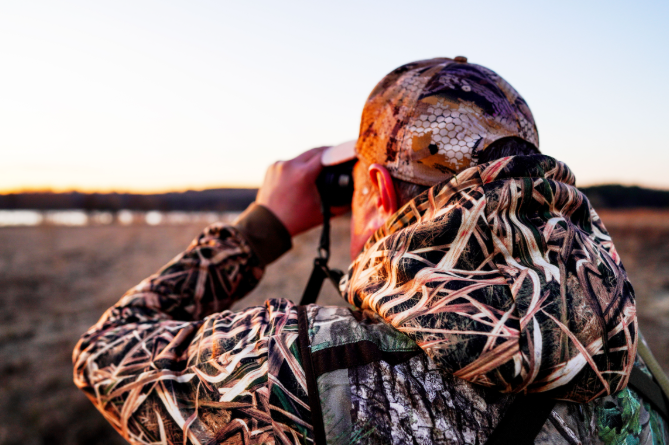
Binoculars remain one of the most important tools for scouting. A quality 10×42 binocular is a solid all-around option for glassing field edges, timber, and mixed terrain during summer scouting sessions.
Don’t Blow the Hunt Before it Begins
Even with all the technology available, wind remains one of the most important factors in deer hunting. A deer’s nose is incredibly sensitive, and mature bucks survive by using it. Hunters need to pay attention to thermals, especially in hilly terrain where rising and falling air currents can shift scent direction unexpectedly.
Many hunters now use hang-and-hunt setups during the early season. Lightweight stands and climbing sticks allow hunters to quickly move into fresh areas based on current deer movement. Mobility can be a major advantage, especially before deer patterns change under hunting pressure. Don’t be afraid to move your set-up.
When fine-tuning stand locations, hunters should focus on fresh deer sign. Tracks, scat, old rubs, and scrapes can reveal where deer are traveling and bedding. However, even the perfect tree can become useless if the wind is wrong. No matter how good a spot looks, hunting it with a bad wind often ends badly. Sometimes the smartest move is simply staying out until conditions improve.
Another key strategy is getting work done early. Mature bucks quickly notice human intrusion, and too much pressure can push them out of an area before the season even starts. Moving stands, trimming shooting lanes, and hanging cameras well before opening day gives deer time to settle back into normal routines.
Technology has made scouting and deer hunting more efficient than ever, but success still comes down to discipline, preparation, and smart decision-making. The hunters who consistently tag mature Iowa bucks are usually the ones who combine modern tools with old-school patience and careful hunting pressure.