
Iowa’s Venom, Oil and Toxic Sap
Iowa’s Venom, Oil and Toxic Sap
I once struck up a conversation with a man from Australia and while talking I asked him the question most people want to know about Australians, “how many times have you been bitten by one of your crazy spiders you have down there?” His answer was shocking, “Oh not many, probably less than 20 times.” My coworker and I laughed in horror and amazement and counted our blessing of living in the relatively venom free state of Iowa. But only relatively venom free, within Iowa’s borders there are a handful of flora and fauna that if encountered can leave an unlucky Iowan itchy, burning, swollen, scarred and in the worst of scenarios, permanently incapacitated or dead.
Flora
I remember vividly when I discovered that poison ivy wasn’t the only harmful plant I had to look out for in Iowa. I was 10 or 11 years old and my two younger brothers and I had just woken up covered with water blisters all over our arms, hands and legs the morning after returning home from a summer time visit to my grandparents farm. The day before we had been wading through head high pasture that was loaded with wild parsnip. After this miserable experience, and a few others, I learned that this invasive plant contains a phototoxic sap that temporarily breaks down the skin’s defense against harmful UV radiation from the sun resulting in blistering sunburns wherever the sap contacts the skin.
A closely related invasive plant known as giant hogweed (thankfully not yet detected in Iowa) has sap so toxic it has caused permanent blindness in unfortunate victims in the past. The best advice I can give for operating in the presence of wild parsnip is to avoid touching it at all, and if it is touched the skin should be washed quickly and kept out of direct sunlight for several days. Mowing or string trimming wild parsnip puts the operator at extreme risk of burns. Any sap that gets in the eyes should be treated by a medical professional immediately. This plant thrives in a variety of habitats including partially shaded areas, but seems to prefer areas that receive full sun.
Poison ivy is the real OG when it comes to toxic plants in Iowa. The phrase “leaves of three leave them be” is a helpful old standby when it comes to identifying poison ivy during its vegetative state in the summer and early fall, but ivy behaves like a true vine when it matures and this is where deer hunters can really get themselves slathered up in extreme itch inducing urushiol oil from poison ivy’s woody vines while crawling up the tree they chose for a hang and hunt. Because of this risk factor I generally try to avoid hunting out of any tree that has a living vine growing on it, but when there really isn’t another option I do my best to identify the difference between a poison ivy vine and its nontoxic competitor virginia creeper vine.
A state forester from the Iowa DNR taught me to look at the fibers tying the vine to the tree to be able to tell the difference between the two, as poison ivy vines have a much hairier appearance than virginia creeper vines. Despite best efforts to avoid touching any poison ivy while mushroom hunting, scouting of deer season, or whatever else brings folks into the woods, unexpected brush ups are bound to happen and the best thing to do at that time is to wash the affected skin with soap and water as quickly as possible.
I like to use dish soap to help thoroughly break down any oils that may be on my skin. This quick clean up can really help prevent a bad break out of poison ivy rash. Poison ivy can be found creeping outside of its preferred forested habitat, and it should be scouted for before doing any mowing or controlled burns in prairies or ditches so as to avoid breathing any aerosolized urushiol oil.
While many other states face the additional threats of contact with poison sumac, and poison oak, thankfully Iowa has not documented either of these species as being present in the state1. Poison hemlock is fatally toxic if ingested, and although I have heard of anecdotal evidence of it causing skin burns similar to wild parsnip, I was not able to find any scholarly documentation that corroborated those claims.
Fauna
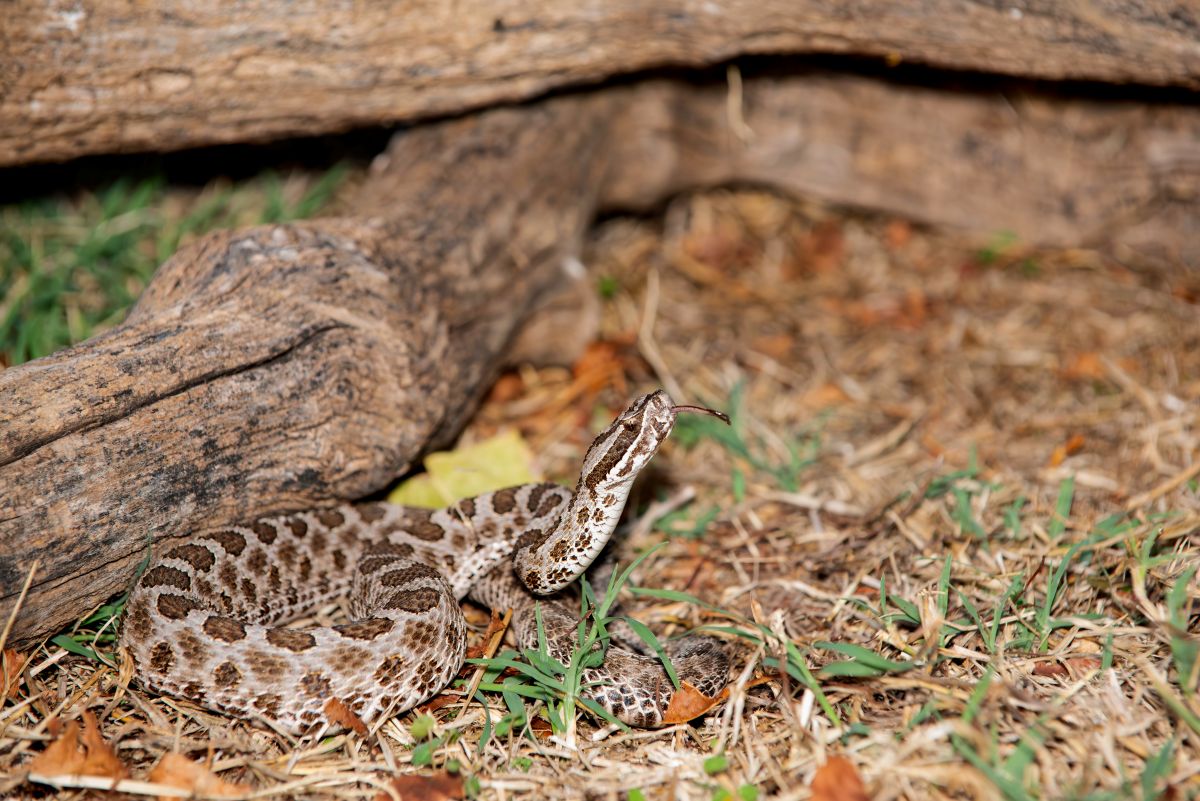
One of my proudest features on my Iowa outdoorsman resume is my somewhat impressive log of rare critters I have seen in Iowa: bobcats, red foxes, badgers, pileated woodpeckers, a fisher, and a jackrabbit. Among my yet to see bucket list species are the four venomous snake species in Iowa, three of which are rattlesnakes: massasagua, timber and prairie. The fourth species of snake is familiar to outdoorsmen of the south- the semiaquatic copperhead.
I recently attended the Iowa Prairie Network Winter Conference where the Iowa DNR presented some of their latest information on the rattlesnake population in Iowa, and while their populations are isolated to specific types of habitat that involve prairie and brushy cover in close proximity, they are very much present in Iowa. A bite from any of these four snakes can be fatal if not treated by medical professionals as quickly as possible. Although encountering rattlesnakes is rare, I do have several friends who when hiking and hunting in other western states had very close, unexpected encounters, so close that when hiking in habitats where these snakes are known to be, I plan to walk slowly while scanning the ground so I can catch a photo instead of a strike.
Arachniphobia has to be one of the most common fears that humans have. I have often wondered if there was some ancient adversarial relationship between people and spiders that has imprinted into our DNA to remind us to have the creeps whenever we see them, or if it’s just simply because we know that a handful of spider species can cause us serious damage if we are bitten by them.
Thankfully in Iowa there are only two species of spiders that pose a serious threat if they attack: the brown recluse, and the black widow. Perhaps the spookiest reality of encountering the brown recluse spider is its namesake reclusive nature, a bite from them is likely to happen before actually seeing them. They live in places where they are unlikely to encounter humans such as woodpiles and other dark and quiet habitats which could include a pair of hiking boots left outside of the tent on an overnight adventure.
Black widows pose the same threat as they prefer the same kind of habitat, and bites from both require immediate medical intervention to limit the threat of the venom. Black widow venom causes brutal muscle spasms and severe pain and brown recluse venom leads to necrosis (tissue death) at the site of the bite that can result in a serious infection which is what would escalate a brown recluse bite to a fatal concern.
Even with these agents of chemical warfare in our woods, fields and creek banks, Iowa is a place free of the abundance of toxic plants and venomous critters many other states contain. The best way to enjoy the outdoors in the presence of these chemical threats is to understand their habitats, and to use caution when exploring them with a quick plan of action to mitigate the effects if a brush up, bite or strike happens.
References
- Wilkinson, J. (2015, July 17). What to do if you have poison ivy. Department of Natural Resources. https://www.iowadnr.gov/news-release/2015-07-17/what-do-if-you-have-poison-ivy
- 6 animals you might not know are protected in Iowa. Department of Natural Resources. (2015, July 17). https://www.iowadnr.gov/news-release/2015-07-17/6-animals-you-might-not-know-are-protected-iowa
- Mekonnen, S. (n.d.). Brown recluse Spider Bites: Know the signs, reduce the risks. Poison Control. https://www.poison.org/articles/brown-recluse-spider-bites?gad_source=1&gad_campaignid=18533167870&gbraid=0AAAAADyGrs_WoFi0nMhk0u1JODXrCSbKd&gclid=Cj0KCQiA18DMBhDeARIsABtYwT3UVkLXxJ5PaG-XrUmnNLITCx_lQMD41cNIaMXCasp8KgEFAx2LgJ0aAj0EEALw_wcB
- Gould Soloway, R. A. (n.d.). Black widow spider bites can be dangerous. Poison Control. https://www.poison.org/articles/black-widow-spiders
May 2026
By Kent Boucher