
Ice Fishing for Pike in the Iowa Great Lakes
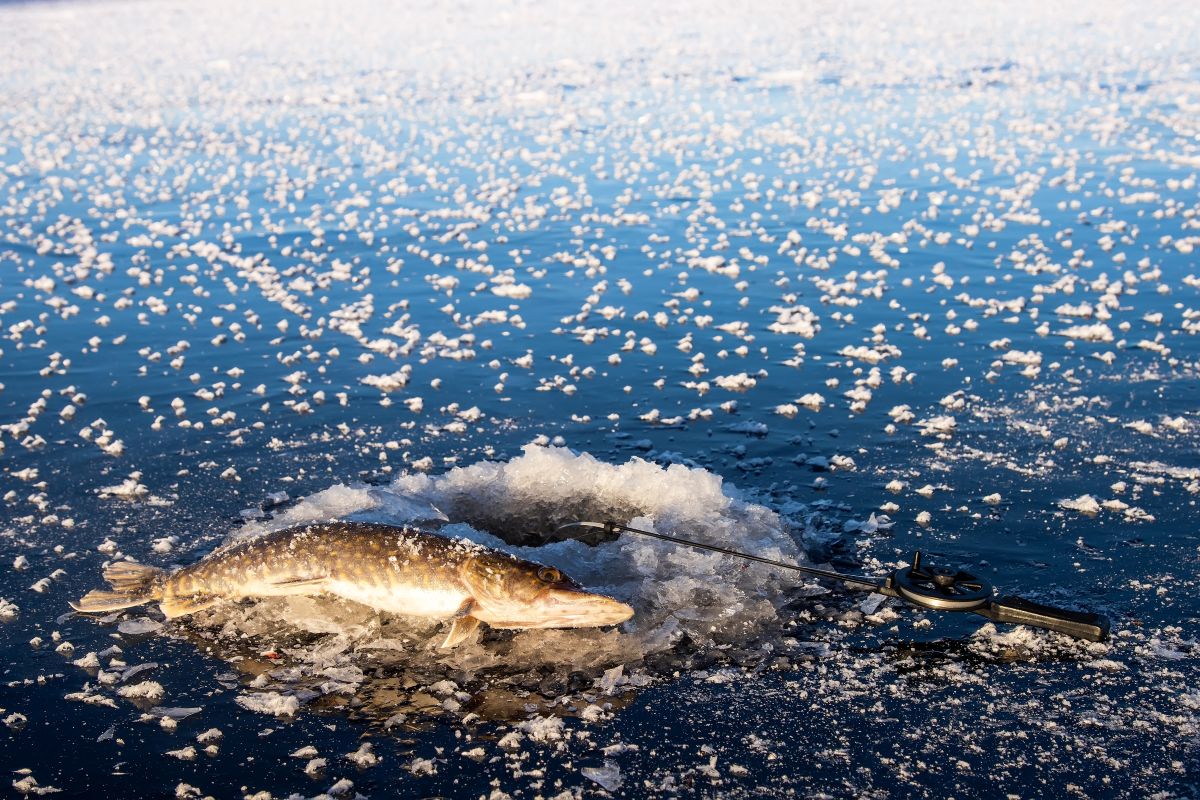
Ice Fishing for Pike in the Iowa Great Lakes
The Iowa Great Lakes are a group of water bodies located in the Northwest part of the state. Seven lakes in this region comprise the IGL, totaling 12,687 surface acres, with three of these lakes being the principal members of the group. Big Spirit Lake, West Okoboji Lake, and East Okoboji Lake are the largest natural lakes in the state of Iowa.
Northern pike are at the top of the food chain when it comes to the top predators in these bodies of water. Often sought after during the open water season, these toothy critters can also be caught during the ice fishing season. The most common technique for targeting these fish during the ice season is with a tip-up.
Tip-up Tactics
John Grosvenor has been guiding on the Okoboji chain of lakes and Spirit Lake since 2001. “When it comes to tip-ups, the Beaver Dam brand is a pretty solid product,” said owner and operator of Fish Okoboji, John Grosvenor. “Honestly, they all work really just fine. You can look at tip-ups that only cost about $10 to $15 and get the same results.” Like anything in the fishing industry, whether open water or ice fishing, you can spend as much or as little as you need to equip yourself for chasing northern pike. “I like the 14-15-inch long tip-ups since they are easier to pack up and take out on the ice. They can slide into a bucket or tote and stack nicely,” adds Grosvenor. “You can carry more around with you.”
One of the things that you need to be keenly aware of when you’re setting up a spread of tip-ups is the weather. Cold, windy days can cause your tip-up to freeze to the ice, making it very difficult to move and handle a hooked fish, and even as you pack up for the day. “I’ve had tip-ups freeze into the ice and, in the process of pulling my spread out, I end up bending them, and in some cases with the plastic ones, they simply break,” continued Grosvenor.
When you’re ready to add line to your tip-up, Grosvenor recommends coated braid. “Normal braid will soak up water, and as you are playing a fish, it can potentially freeze as it’s lying out of the ice. For the tip-ups we set up, we will use 25 and 30-pound coated braid.”
When you set up a tip-up spread, place them at intervals and within the direct line of sight of one of the windows in your ice hub or shack. “I walk out 10 yards, then 20, and so on so that all the tip-ups are visible to the anglers”. You can set a spread on either side of your ice shelter as long as you can see the tip-up flag once a fish has taken your bait.
Line and Tackle
When you’re adding a line to your tip-up reel, you can terminate the end with a metal leader to prevent bite-off; however, these are incredibly visible in the water column. “Over the years, I’ve used quite a few different strengths of fluorocarbon to tie on as a leader, but the higher you go in pound test, the harder it is to tie. I’ve found that 25-pound fluorocarbon really does well and have not had any issues with lines being cut.”
An egg sinker is added to the coated line, and then a swivel is tied to the end of the coated braid. Below that, a 2 to 3-foot fluorocarbon leader is added with a treble hook at the end. “For larger baits that we use here, I will go to a larger number two treble hook. For large minnows, like a 4-inch blue chub, I’ll go down to a number four treble hook,” noted Grosvenor.
When you’re threading the hook in the minnow, you can place it in the lips or just behind the dorsal fin. One tip for bait is to cut off a section of the minnow’s fin at the back. This prevents your bait from swimming off while providing the action to entice northern pike to take it. “Just don’t cut too much off. It may result in an injury to the fish. You want very active bait, but it makes it easier for the predators to grab it,” added the guide.
Where to Find Them
When you’re out chasing after panfish, you can target pike! Where the panfish are, so will the predators be. Place your tip-ups at depths of 17 to 22 feet or so. “I’ll set these up at depths of 1-foot off the bottom, 3-feet off the bottom, and 5-feet off the bottom, all the way up to about midway up in the water column,” continues Grosvenor. “These fish cruise at all depths looking for a meal, so it’s important to have your lines set at a depth where they may slide by.”
You can use your electronics to measure depth, but you’ll need a quick, easy way to see how much line you’ve deployed. Take a tape measure and pull it out at arm’s length, both arms out wide. Figure out how long that measures to, and there’s a quick scale you can use. If you’re fishing a basin with little to no weeds, electronics will tell you exactly how far your bait is in the water column.
If you’re out on West Okoboji Lake and all you want to do is set up a spread of tip-ups for pike, look for a weed line. “Set lines in the 16 to 18-foot depth and set some up just above the weeds,” advises Grosvenor. “You don’t want to fish down in the weeds but just above them as predators look for an easy meal.” Once you have an indicator that a fish has taken your bait, wait till the first run is complete before setting the hook. “These fish will run off, stop for a second to reposition the bait so they can swallow it, and then continue to run. That’s when you set the hook, and the fight is on!”
Adding tip-ups to your angling adventure will undoubtedly expand your fish-catching opportunities. There are some giant predator fish in the Okobojis and it can be quite an experience, especially through the ice. Remember that musky season is closes from December 1st through May 20th. There’s a high chance you will hook one, but those must be released back into the water immediately.
Enjoy the resources we share here in Iowa, don’t leave anything out on the ice, but take all the memories you’ve made during that trip. Tight Lines All!
By Ben Leal
For the Issue of the Iowa Sportsman January 2026, check it out below.
For Industry News in the Cattle and Dairy Industries