
Iowa’s Venom, Oil and Toxic Sap
Iowa’s Venom, Oil and Toxic Sap
Iowa’s Venom, Oil and Toxic sap are very common in some instances to scarcely seen it the outdoors. Most people associate dangerous wildlife with places like Australia. Venomous spiders, snakes, and other creatures seem to lurk around every corner there.
I once struck up a conversation with an Australian man and asked him the question many Americans secretly wonder about:
“How many times have you been bitten by one of those crazy spiders you have down there?”
His answer was shocking.
“Oh, not many,” he said. “Probably less than 20 times.”
My coworker and I laughed in horror and disbelief. At that moment, we counted ourselves fortunate to live in Iowa, a state that is relatively free of venomous animals and toxic plants.
But only relatively.
Within Iowa’s borders are several plants and animals capable of causing painful burns, severe allergic reactions, swelling, tissue damage, and, in rare cases, permanent injury or death.
Toxic Plants in Iowa
Wild Parsnip – https://www.iowadnr.gov/news-release/2015-07-17/what-do-if-you-have-poison-ivy
I vividly remember learning that poison ivy wasn’t the only harmful plant in Iowa.
When I was 10 or 11 years old, my two younger brothers and I spent a summer day exploring my grandparents’ farm. We wandered through a pasture loaded with wild parsnip and thought nothing of it.
The next morning, we woke up covered in painful water blisters.
After that miserable experience, I learned that wild parsnip contains a phototoxic sap. When the sap touches your skin and is exposed to sunlight, it can cause severe blistering burns.
A closely related invasive plant, giant hogweed, produces an even more dangerous sap. In some cases, exposure has caused permanent blindness. Fortunately, giant hogweed has not been documented in Iowa.
The best defense against wild parsnip is avoidance. If contact occurs, wash the affected skin immediately and keep it out of direct sunlight for several days.
Mowing or string trimming wild parsnip can be especially dangerous because sap may be sprayed onto exposed skin and eyes. Any eye exposure should be treated as a medical emergency.
Wild parsnip grows in a variety of habitats. However, it is most common in sunny roadsides, prairies, pastures, and unmanaged fields.
Poison Ivy – https://iowasportsman.com/tag/morel/
When it comes to toxic plants in Iowa, poison ivy is still king.
Most people know the old saying:
“Leaves of three, leave them be.”
That advice works well during the growing season. However, mature poison ivy often grows as a woody vine climbing trees.
This is where deer hunters can get into trouble.
While climbing into a stand, it is easy to brush against a poison ivy vine and become coated in urushiol oil, the substance responsible for the itchy rash.
Because of that risk, I usually avoid hunting from trees that have living vines growing up the trunk. When another option isn’t available, I try to identify whether the vine is poison ivy or its harmless look-alike, Virginia creeper.
A state forester with the Iowa DNR once shared a useful tip. Poison ivy vines typically look much hairier than Virginia creeper vines.
Despite our best efforts, accidental contact still happens.
When it does, wash the affected skin with soap and water as quickly as possible. I prefer dish soap because it does an excellent job of removing oily residues.
A quick wash can dramatically reduce the severity of a poison ivy rash.
Poison ivy is not limited to forests. It also grows along fence lines, ditches, field edges, and prairie habitats. Before mowing or conducting prescribed burns, it is worth scouting the area for poison ivy.
Poison Hemlock – https://www.extension.iastate.edu/smallfarms/poison-hemlock
Poison hemlock is another invasive plant found in Iowa.
Unlike poison ivy and wild parsnip, poison hemlock is most dangerous when ingested. Every part of the plant contains toxins that can be deadly to humans and livestock.
Although some people report skin irritation after touching poison hemlock, I was unable to find reliable scientific evidence confirming those claims.
Venomous Animals in Iowa
One of my favorite parts of spending time outdoors is encountering wildlife.
Over the years, I have been fortunate enough to see bobcats, red foxes, badgers, pileated woodpeckers, a fisher, and even a jackrabbit.
Still sitting on my bucket list are Iowa’s venomous snakes.
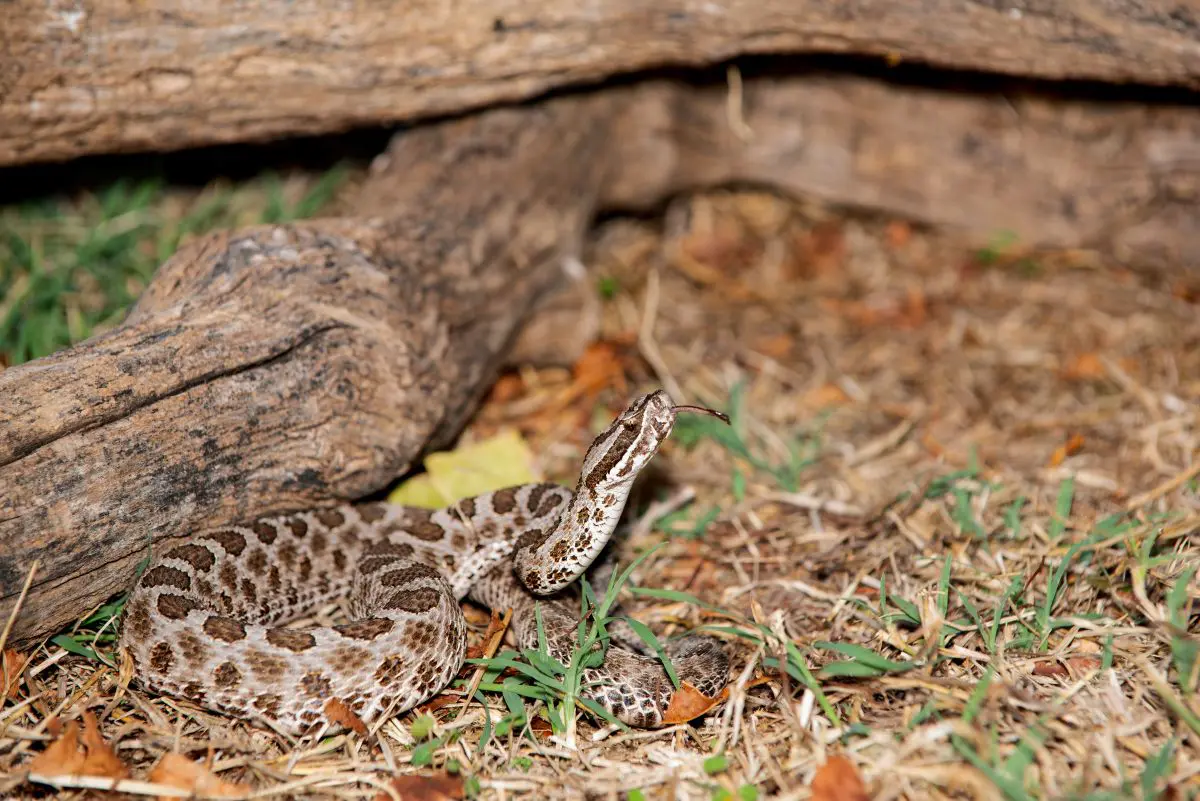
Venomous Snakes in Iowa
Iowa is home to four venomous snake species:
- Eastern Massasauga Rattlesnake
- Timber Rattlesnake
- Prairie Rattlesnake
- Copperhead
I recently attended the Iowa Prairie Network Winter Conference, where Iowa DNR biologists discussed rattlesnake populations in the state.
These snakes are generally limited to specific habitats that contain prairie, rocky terrain, and brushy cover. However, they are still very much present in Iowa.
When hiking in known snake habitat, I try to move slowly and watch where I place my feet. I’d much rather come home with a photograph than a snakebite.
Dangerous Spiders in Iowa
Arachnophobia is one of the most common fears people have.
Whether that fear comes from instinct or experience, it is understandable. Some spiders can cause serious medical problems if they bite.
Fortunately, only two spider species in Iowa pose a significant health risk:
- Brown Recluse Spider
- Black Widow Spider
Brown recluse spiders prefer quiet places such as woodpiles, sheds, garages, and storage areas.
Their venom can destroy tissue around the bite site and may lead to serious infections if left untreated.
Black widows occupy many of the same habitats. Their venom affects the nervous system and can cause severe pain, muscle cramps, and other serious symptoms.
Staying Safe Outdoors in Iowa
Compared to many states, Iowa remains a remarkably safe place to enjoy the outdoors.
Still, toxic plants and venomous animals are part of the landscape. Knowing how to identify them is the best way to stay safe.
Learn their habitats. Watch where you step. Pay attention to what you touch.
References
- Wilkinson, J. (2015, July 17). What to do if you have poison ivy. Department of Natural Resources. https://www.iowadnr.gov/news-release/2015-07-17/what-do-if-you-have-poison-ivy
- 6 animals you might not know are protected in Iowa. Department of Natural Resources. (2015, July 17). https://www.iowadnr.gov/news-release/2015-07-17/6-animals-you-might-not-know-are-protected-iowa
- Mekonnen, S. (n.d.). Brown recluse Spider Bites: Know the signs, reduce the risks. Poison Control. https://www.poison.org/articles/brown-recluse-spider-bites?gad_source=1&gad_campaignid=18533167870&gbraid=0AAAAADyGrs_WoFi0nMhk0u1JODXrCSbKd&gclid=Cj0KCQiA18DMBhDeARIsABtYwT3UVkLXxJ5PaG-XrUmnNLITCx_lQMD41cNIaMXCasp8KgEFAx2LgJ0aAj0EEALw_wcB
- Gould Soloway, R. A. (n.d.). Black widow spider bites can be dangerous. Poison Control. https://www.poison.org/articles/black-widow-spiders
May 2026
By Kent Boucher