
Calming A Hyper Gun Dog
Calming A Hyper Gun Dog
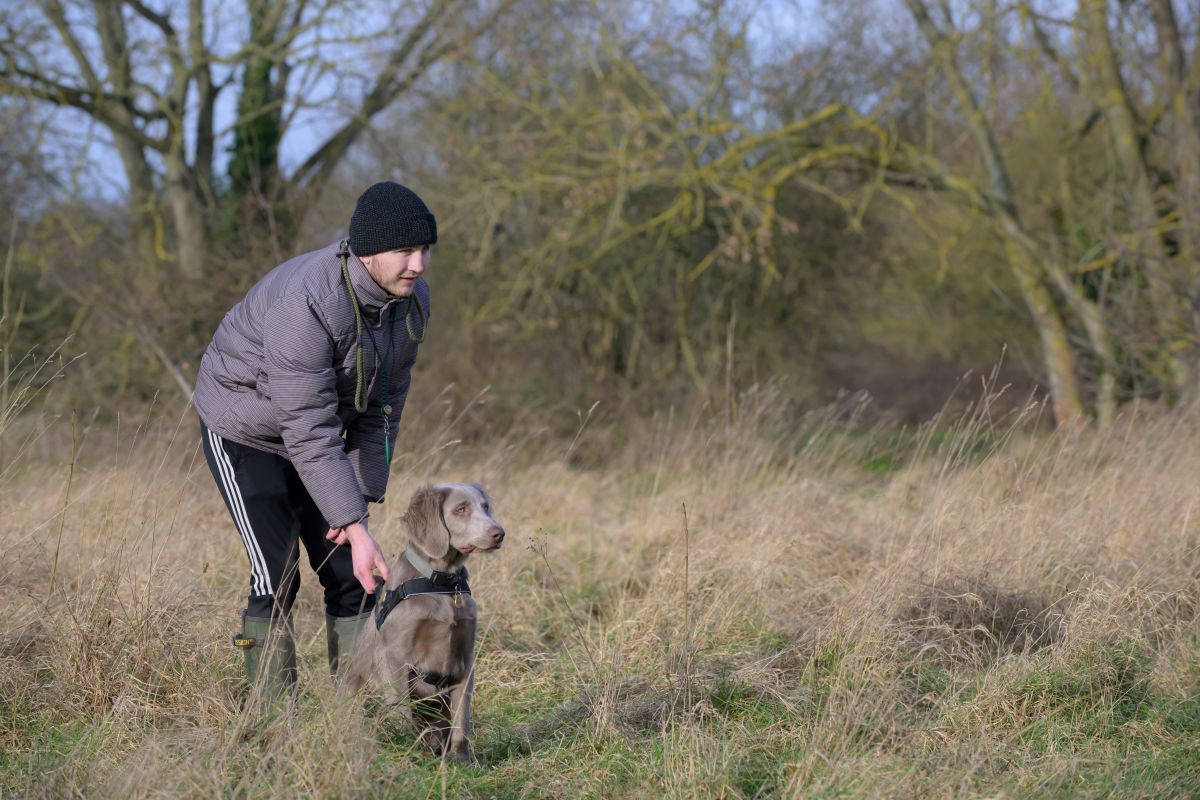
We’ve all experienced a hyper gun dog. If we’re honest, there have been times when the dog is ours. A hyper dog can be a lot of things: annoying, out of control, disruptive, destructive, exhausting, etc. BUT a hyper dog can also be led and taught to manage their energy, anxiety and athleticism.
If we have a hyper gun dog, we need to be straightforward with ourselves and our dog. To a good extent, we ARE responsible for their behavior. Sure, some dog breeds and genetic lines are known to have more energy than others. And yes, some dogs have conditions that cause them to wind up. Nonetheless, in most cases (if not all), a hyper dog simply needs to be more clearly and consistently led.
Basic Principles
Principles for helping a dog learn how to control their energy and behave in such a way that they are described as calm rather than hyper.
What’s an example of these principles in action? First, have a goal in mind. This might be to have a dog that is controlled at the truck, before the hunt.
Small To Big
If we’ve never taught our dog to behave calmly, especially when they’re in an exciting situation, we can’t expect them to get out of the truck under control and remain calm when all of their dog friends and human friends are there. Not to mention, they’re all together in a field with their hunting gear and guns ready to go “play the game” they were bred to play.
We help our dog calmly execute this “big” moment by giving them many “small” moments that compound and build their understanding of how to behave, even when the energy is high. A “small” lesson you can consistently teach and build on at home is to expect them to stay in their crate until you invite them out and to exit under control.
Be Consistent and Clear
If we aren’t consistent and clear, we will confuse our dogs. If you don’t believe me, start being inconsistent and blurry with a situation your dog understands. You’ll start to see them misbehave in more than that area and they’ll begin to look at you with a “what’s going on” expression.
Don’t Neglect Exercising Their Mind
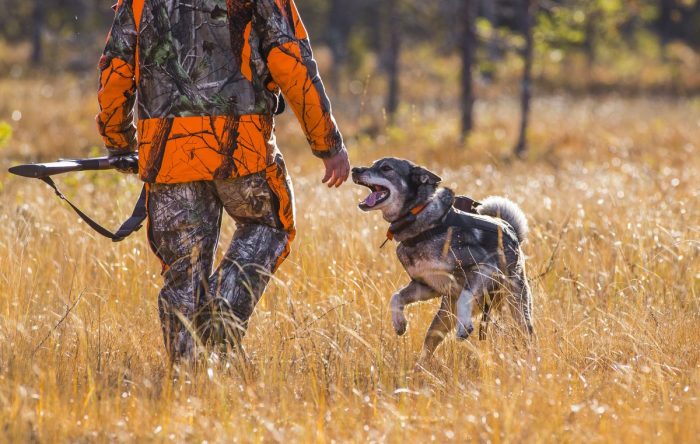
I’ve heard numerous people say things like, “I have to run my dog before we go hunting so I can get them to focus and be controlled.” My guess is that most of the dogs that “need” this kind of routine rarely experience training sessions that are more mental than physical. Yes, our dogs need physical exercise and stimulation. But their mental exercise and stimulation are just as important, and they have a big reward.
If you want a calm dog when all the pre-hunt excitement is building, teach your dog to “place” and then work up to the point that you can; toss bumpers over/near them, walk and work other dogs around them, you can walk circles around them, you can pack your hunting gear and get ready, all while they are settled in and calm on place.
Give Them an “Out”
Sometimes our dogs need options and that’s okay. Again, if you want a calm dog at the truck, before a hunt, you need to help them learn and execute that behavior. In your training sessions, maybe you notice that they are ready to start practicing calm when guests come over to your house. Rather than just expecting them to greet your guests as they come in the door, have your dog sit and wait to meet your guests until you give them the “okay” command.
If your dog starts to wind up, ask them to sit and let your guests go to them rather than your dog going to the guests. If your dog continues to wind up, don’t keep trying to fit a square peg in a round hole; send your dog to “place” or a location that has boundaries they will mind. They need a place that is safe and familiar, where they can find their calm. The “safe” place you might need to send them to at the truck if they are struggling to stay calm is in the kennel. Don’t be aggressive or pushy. Stay calm and understanding, your dog just might need another option.
Continuous Training
If our dog starts to do something we don’t like, we need to ask “why”. More than likely, there is a “break” in their chain of understanding. We were either inconsistent or unclear. Or the situation is new and our expectations were unrealistic. If we always have our goal in mind, we can “aim small and miss small” and multiply our “wins” to reach our target. We’ll likely never accidentally get to where we wanted to go with our dogs. One of the fastest ways to get to where we want to go with our dogs is to capitalize on the daily opportunities and routines life presents.
May 2026
By Kyle Dana