
Beginner Mistakes in Coyote Trapping
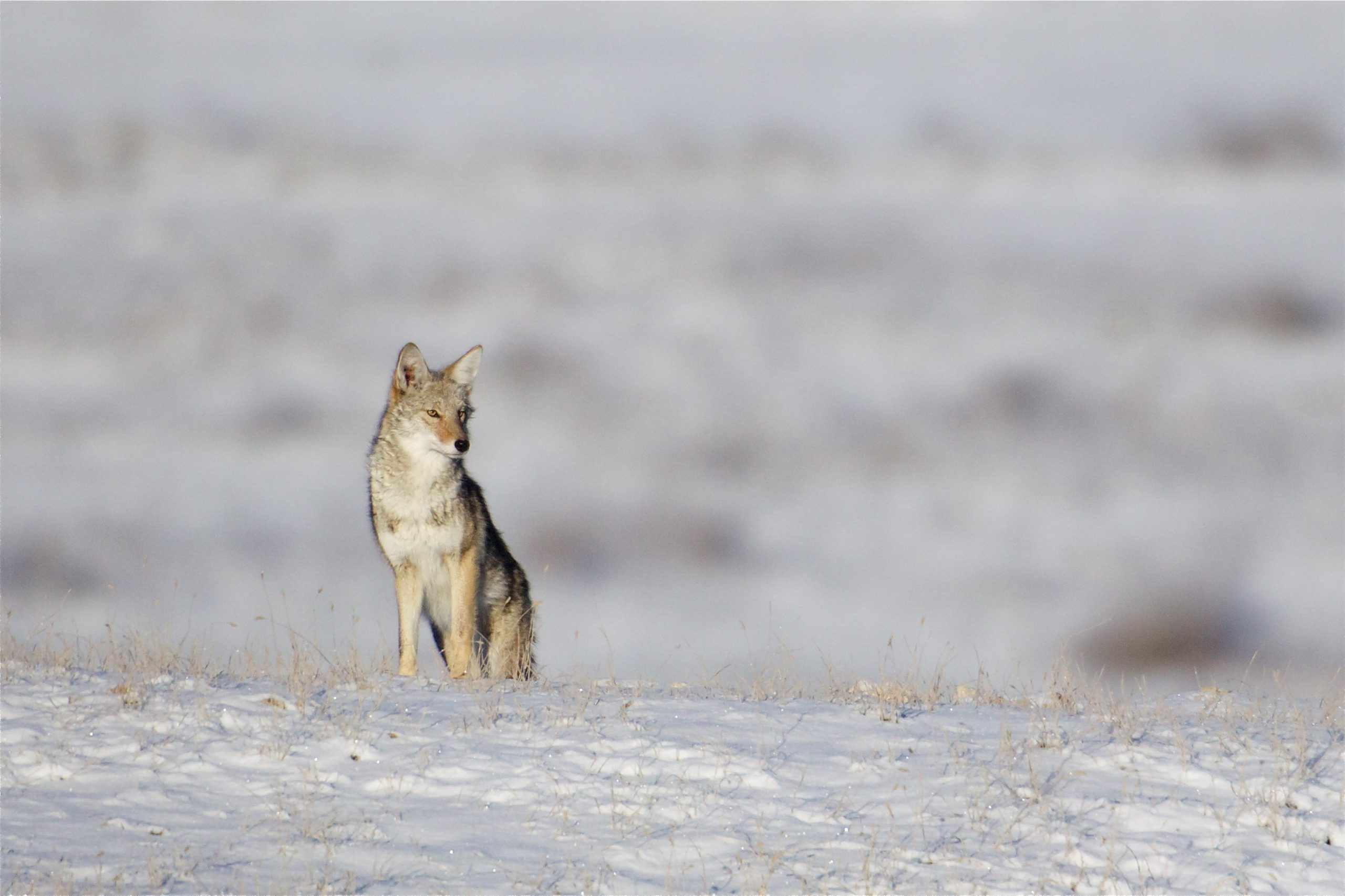
Avoid These Mistakes Made by Beginning Coyote Trappers
Coyote trapping is both a challenge and an art that it seems fewer and fewer people tackling. To coyote trap, you need a few supplies as well as some woodmanship skills, patience, and meticulous attention to detail. For the new trapper, it can be tough to outsmart these coyotes, and you will make many errors, before you begin to see some success. The most critical mistakes beginners make revolve around scent control, inadequate trap maintenance, poor set placement based on scouting, and ineffective bait and lure application. Once you begin to understand these few components, I guarantee you will see more coyotes in your traps.
Scent Control
Let’s face it: the coyote’s nose is their superpower, and they have so many more olfactory sensors that can pick up our human odor. This is the number one reason sets get ignored or dug up. New trappers just don’t realize how much human odor they transfer. That whiff of gasoline from your truck, the laundry detergent on your coat, or the breakfast you just ate all linger, and the coyote smells it all.
The rookie mistake is handling everything with bare hands or the same old gloves you use for everything else. You need a sterile process. Gloves are non-negotiable. Get yourself a pair of dedicated rubber or latex gloves and only use them when you’re touching your traps, stakes, and tools. Never touch your hat, your clothes, or anything else with them. These will save you a lot of disappointment in the future and are well worth the investment.
Next consider your boots. Walking all over the set location with your regular boots can transmit a lot of odor too. You want to have clean, rubber boots that will reduce your scent left behind. Wear clean rubber boots reserved just for trapping, and walk around the set, not right through it.
Along similar lines, be conscientious of your equipment and where you are storing it. Don’t let your shovel or sifter sit next to a gas can. Keep your trapping gear separate and clean. A speck of oil can ruin your efforts instantly. If your equipment smells like anything other than dirt and nature, the coyote is going to know something is wrong.
Next you will want to clean and sterilize your traps. A prepared trap is a fast, quiet, and deadly trap. Beginners often grab a trap out of the shed and expect results. Wrong! You need to eliminate foreign smells and make sure that trap snaps shut like lightning. You need decent and reliable equipment. Look for sturdy coil-spring foot-hold traps in the #1.75 to #3 size range. Make sure they have good swivels to prevent the coyote from twisting out.
The Prep Process
You can’t skip the prepping part. It’s essential for odor control and function. You need to get rid of all the oils, factory grease, and rust. Boil your traps with a commercial trap dye. This colors the traps dark and neutralizes odors. Crucially, do not use soap as it leaves detectable residue.
After they are completely dry, dip them in melted trap wax (paraffin is common). The wax coats the trap, stopping rust and, most importantly, making the moving parts glide silently and fast. If your trap squeaks or moves slowly, the coyote will feel the resistance and be gone before the jaws close.
Setting on Sign
This is where the most time is wasted. If you set a trap where coyotes rarely walk, no lure on earth will pull them in. You can’t trap coyotes that aren’t there!
Beginners tend to set traps where it’s convenient, not where the coyotes already travel. Your goal is to intercept a coyote on its daily commute. This time of year, you can catch coyotes in a routine, so if you are able to spot one in the daytime, think about where he came from, and pay attention to where he’s going. Then go set your traps. You need to become a scout and look for sign (tracks, scat, and obvious routes). Coyotes are lazy; they use the path of least resistance and best cover.
If you don’t know where to start, look around crop fields, pasture edges, and timber lines. Coyotes patrol the line where the woods meet the cornfield, hunting small critters while staying near cover. Look for trails running parallel to the edge. Any narrow strip of timber, fence line, or creek bank that forces animal movement into a small area is a natural funnel. Set your traps right on the mouth of these funnels, or look for some well-used paths. Where a trail goes under a fence or through a culvert, or where a dense area shrinks down, these are guaranteed travel routes. The main point is to stop setting traps randomly. Find the sign, find the path, and set your trap right in the middle of it.
Bait and Lure
When a beginner finally finds a good spot, they tend to make one final mistake: slathering the set with too much scent. An overwhelming, heavy smell is unnatural and alarms the coyote. Instead, use a little to pique their curiosity. Use one or two drops of a quality commercial lure. That’s it! If you use a gland lure (territorial), put it on the backing (a clump of grass or rock) slightly above the set. If you use a call lure (stronger, used to attract from a distance), put it up high on a nearby branch. Now, if you glob on too much lure, the coyote will often circle widely to avoid stepping directly into the heavy scent cone, resulting in a clean miss.
Next, you will want to learn a good dirt hole set. This is your best friend. It mimics a buried meal. Use a small, golf-ball sized piece of meat bait down a narrow hole. The smell should be subtle, forcing the coyote to step right on the pan to investigate the source of the odor.
Learn From Every Miss
The biggest difference between a beginner and a successful trapper is the ability to analyze failure. When you check a trap and it’s empty, don’t just pull it and walk away frustrated. Learn from it. Did the coyote walk around the set? This could be due to bad guiding or backing. Did the trap spring but you missed the coyote? This could be from too much pan tension or shaky bedding. Was the trap dug up? It’s possible that your bait was too exposed or the trap wobbled.
Just as you learn from misses, every successful trap is proof you did something right; replicate it. Every miss is a detailed lesson on what the coyote figured out; fix it. Stick with what works for you, refine your technique, and you’ll start connecting with those coyotes.
If you practice scent control, set your traps where you know there are coyotes, and keep learning as you go, you will be on your way to being an excellent trapper. Best wishes this winter!
By Jacob Dean
For the Issue of the Iowa Sportsman January 2026, check it out below.
For Industry News in the Cattle and Dairy Industries