
December Coyote Hunting
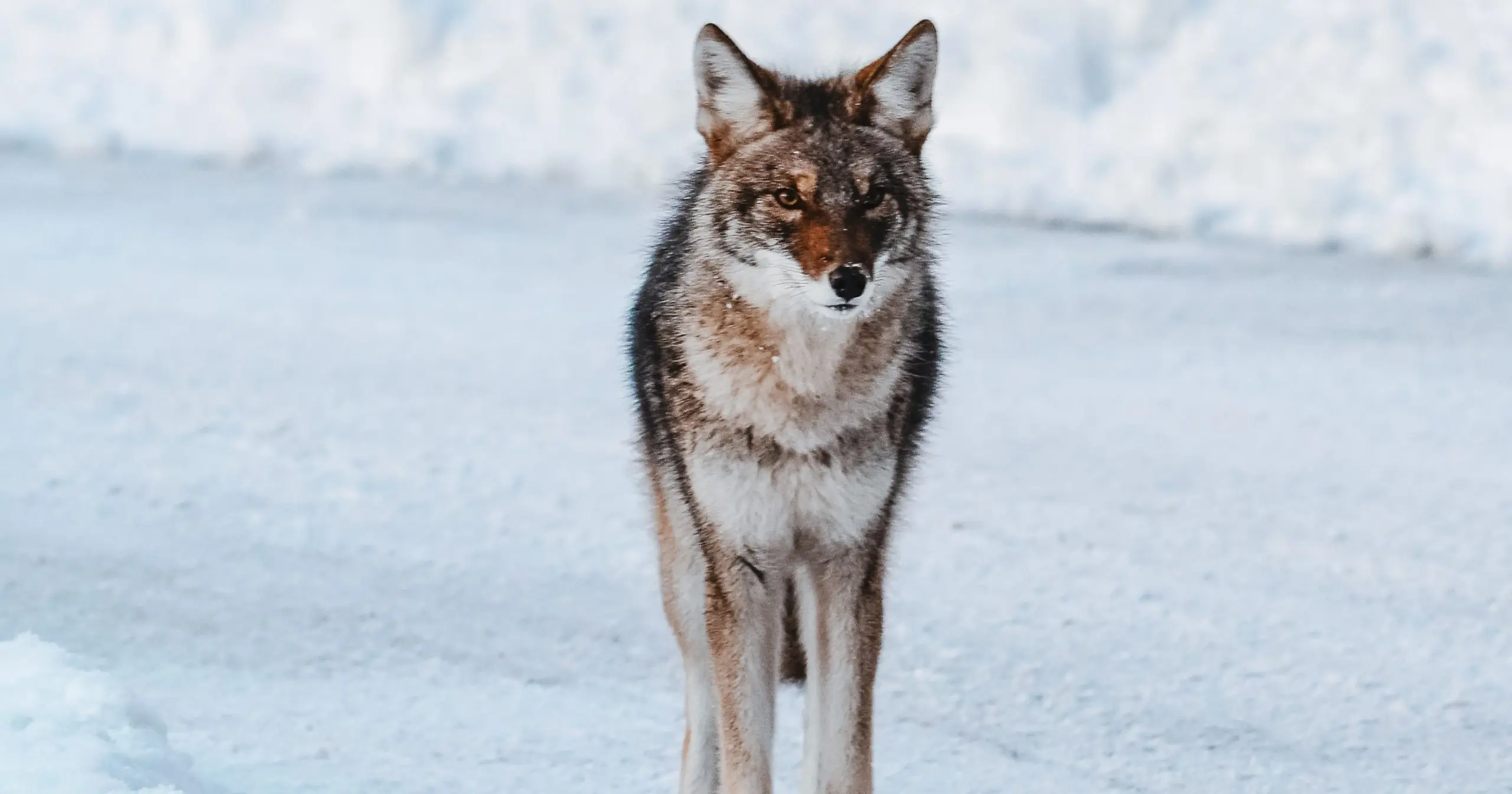
December Coyote Hunting
By Nathan Graham
One of my favorite things to do in the winter is coyote hunt. For Iowa coyote hunters, winter can be some of the most exciting weeks of the year, and we are just approaching when the hunting is best. As coyotes enter the breeding season, they become more vocal, territorial and responsive to calling. Pairs are forming, males are competing for females, and coyotes are paying close attention to unfamiliar sounds and scents in their territory. That makes now an excellent time to grab your rifle and head outside.
We will look at some popular cartridges and ammo and then get into some of my favorite tips on calling.
Calibers and Ammo
When it comes to coyote hunting, there are a lot of cartridge choices, but a handful have become favorites because they combine accuracy, relatively flat trajectories and effective performance. The .223, .22-250, .204 Ruger and .243 are popular choices. All of these shoot pretty flat, which is essential for coyote hunting.
The .223 is really popular, especially in the AR-1 platform. A lot of night rigs you see set up with thermal or infrared will be on .223 AR-15s, while the .22-250 offers higher velocity and a flatter trajectory for hunters who regularly encounter longer shots. The .243 steps up in bullet diameter and energy and is also useful if you want a rifle that can handle larger game. Any of these are good choices and will give you a good experience.
Ammunition choice matters just as much as the cartridge. Coyote hunters commonly look for varmint or predator bullets that expand quickly. Varmint rounds tend to be lighter grains and will help you shoot flatter and reach out farther. Lighter bullets can be effective for coyotes and may reduce the chance of excessive pass-through if you’re concerned about fur condition. Although, some loads can cause significant hide damage. If preserving fur is important, ammunition selection becomes especially important.
Sometimes Less Is More
Right now, we are on the front end of the breeding season. It can be tempting to fill the woods with aggressive howls challenge, interrogation and domain howls. They can certainly bring a coyote running, but they can also turn one away.
The problem is that you rarely know which coyote is listening. An aggressive howl might excite a territorial alpha, but it could just as easily be heard by a subordinate or younger coyote that has no interest in a confrontation.
My go-to this time of year is the classic rabbit in distress. I’ll let this play for a while on my electronic caller, then I’ll shut it off and wait. It’s important to constantly be scanning the landscape. A shy or curious coyote might be using the cover or topography to stay hidden.
If I haven’t called in a coyote with the rabbit call, I’ll try a few female calls. I like a female invitation howl then I’ll wait. You might hear a lone male looking for his female. Sometimes they will answer if you just turn off the call and sit in silence. You do not have to be playing sounds constantly.
Female invitation howls can be particularly interesting pre-breeding season to other females. These sounds can suggest that another female is nearby and receptive, but they aren’t always interpreted as friendly. An alpha female may hear another female in her territory and respond aggressively. A paired female may also be unwilling to tolerate another female nearby and may instead lead her male away.
Next, I’ll move on to distress sounds. Distress sounds can be particularly effective because coyotes aren’t necessarily responding because they’re hungry. They may be more interested in finding out what is making the distress sound.
During one hunt on public ground, I shut off the caller. I decided to wait a bit and do a couple lone howls. Immediately, I got several answering me. The best part is that they were coming in. Every sound you make can change a coyote’s attitude. Sometimes the best strategy is to let the area tell you what to do next.
Early season I do stick to prey calls and female calls. If you see one hung up, or before you leave, you can try a challenge call or something more aggressive to challenge a male. This can have mixed results. You can possibly scare away timid coyotes.
Always Plan for the Downwind Approach
No matter what, keep the wind in mind. Coyotes are already notorious for circling downwind, but vocalizations can make that behavior even more important. When a coyote hears another coyote, it often wants to smell that animal before committing to an approach.
That means your downwind side needs to be covered. Last year, I was anxious to go hunting at night with my thermal. I set up in a fencerow by some trees. I was calling between two timbers and watching two fields.
One had perfect wind; the other was downwind. I knew it was risky, but decided to try anyways. After playing a female howl, I had one respond. A pair of white thermal dots showed up on my thermal scope. They were around 600 yards away. They came in on dead run. When the first one got to about 400 yards, he caught my wind, turned on a dime and was out of there. You can bet I educated those coyotes and did more damage than good.
Putting it All Together
While it is December, there are still deer seasons going on. It’s important to know the rules and regulations about when you can hunt and what you can use as far as optics, thermals, infrareds, and light. It’s up to you, the hunter, to know these rules and to be responsible. You can pick up the latest version of the Iowa Rules and Regulations at most sporting goods stores or read it online at the Iowa DNR’s website. Be sure you have proper licenses and equipment, follow the current rules and regulations, and are respectful of landowners and neighbors.
Now is prime time for Iowa coyote hunters. The breeding season is just around the corner, so now is a great time to go out, look for a sign, and do a little calling. As pairs form and males compete for females, coyotes are constantly listening for rivals, potential mates and anything that doesn’t belong in their territory. Understanding that and knowing when to call and when to stay quiet can help you experience some great December hunts.
Follow us on Facebook! The Iowa Sportsman | Facebook