EARLY MORNING HYBRID STRIPED BASS
EARLY MORNING HYBRID STRIPED BASS
The air was thick, and a heavy fog was hovering above the calm surface of the water. As I pushed the boat off the trailer at the launch, I couldn’t help but wonder what would be lurking just below the surface. The water temperature was high, and there was sure to be some type of predator fish just waiting for that first bait to hit the water. So, I cruised across the lake towards the first area that I had planned to check after studying the map previously. Before I could even get there, the surface lit up, and I knew what it was immediately. Hybrid striped bass!
What are Hybrid Striped Bass?
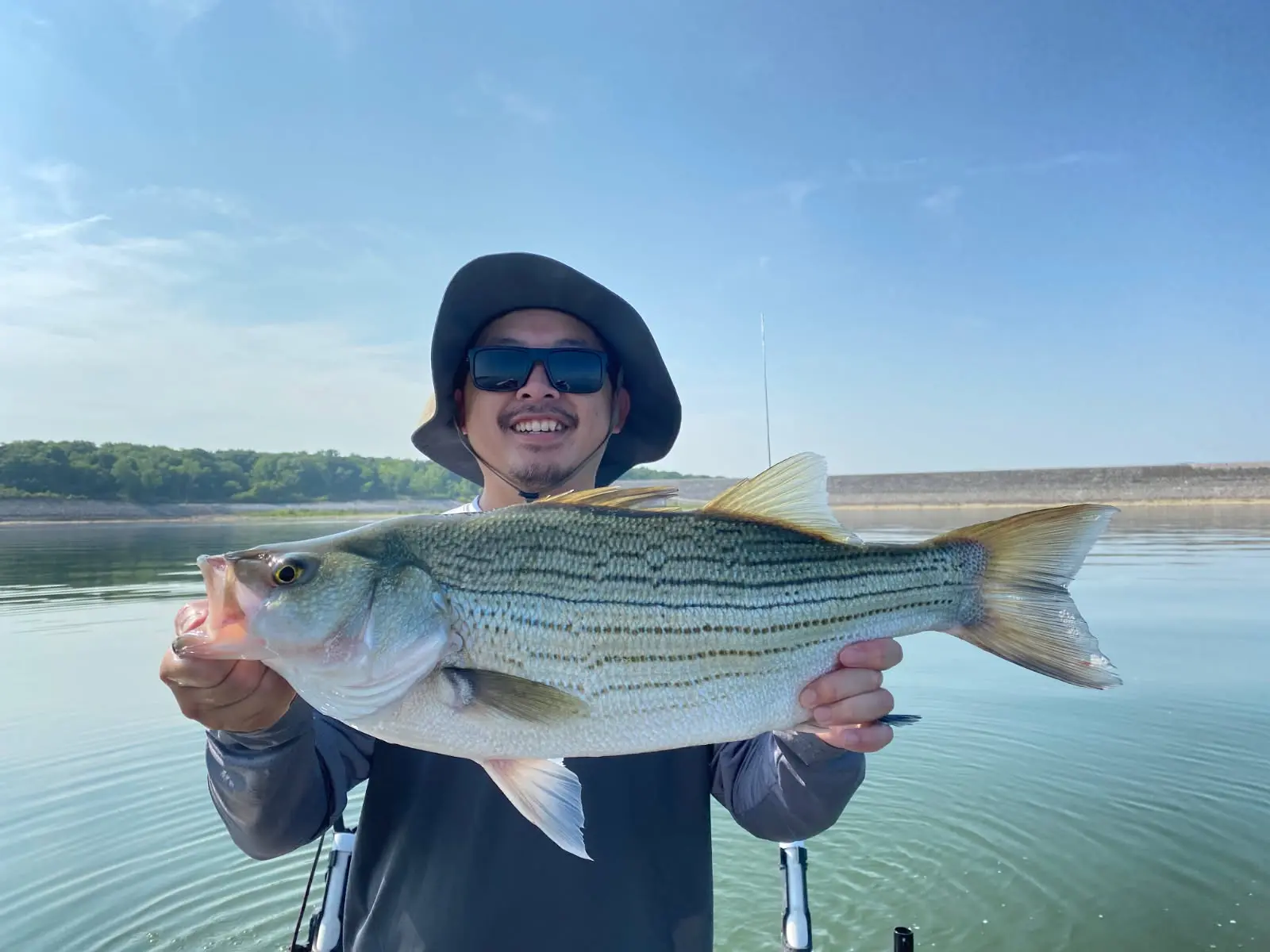
Hybrid striped bass are the result of two different parents from the temperate bass family. Developed in hatcheries (as they do not reproduce naturally), white bass eggs are fertilized by striped bass milt or vice versa. This Hybrid species grows very fast, usually resulting in a deep-bodied, silver colored, shad-eating machine with straight and broken horizontal lines running down the sides.
Their introduction into Iowa waters is due to the need for shad control and a food source as well. These fish are fast-growing with a relatively short lifespan, so constant stocking is needed for shad management. Hybrid striped bass have been called by many nicknames such as wipers, stripers, hybrids, sunshine bass, and linesiders. There have been many arguments over what they should be called, but one thing everyone does agree on is how fun they are to catch!
The Thrill of the Catch
For this article, I will be referring to them as wipers (white striper) because that’s what I like to call them. Wipers are arguably one of the top three hardest-fighting fish to catch in Iowa. No other fish in this great state will make the drag scream like a wiper. They will test each part of your setup and will always find the weakest link, sometimes even being the person holding the rod. Wipers have ripped dozens of anglers’ rods right out of their hands and swam them down to the bottom of the lake. They will bend hooks straight, pull knots loose, snap fishing line, spool the line, and even snap rod tips when high-sticked.
For this reason, it is important to take extra precautions when targeting wipers. I’ll keep it short and simple. Premium heavy wire hooks, 10 to 15lb braid, a reel with smooth drag, a secure knot, and a medium to medium-heavy rod.
Get on The Morning Bite
Low light periods tend to be the best time to target these fish and, in my opinion, morning is better than evening. Wipers are visual feeders so they will ambush bait during these low light periods like clockwork. I’ve seen them literally herd schools of shad into a tight ball, just to come back and crash them, gorging on as many of them as they can manage to get into their mouths. When you can find them doing this, it doesn’t take much to get one to take your bait while vertical jigging. Keeping a bait in the water is key when they’re feeding like this because, during a hot bite, you want to have a fish hooked—or at least a bait in the water—almost all the time.
With two people, it’s much easier but if you are alone, keep a deadstick hanging on the other side of the boat about halfway down the water column. You’d be surprised how many I’ve caught just hanging a ¼ oz jig and plastic over the side of the boat. Once the action of a fish fighting on your line goes dead, they will move on.
Where to Find Wipers
For locating wipers, start by narrowing down a few locations you’d like to check out. Use a lake map to find shallow flats where wipers can push baitfish up onto, making them easier to catch. Wind can also play a big part in baitfish location so don’t overlook the wind-blown shores, especially if the wind has been blowing in the same direction for a few days.
Submerged points, sharp breaks, and creek channels are also key feeding structures where fish can use the contour to ambush bait and pin them against the ground. Search these areas with 2D sonar to cover more ground fast. If you see thick squiggly lines all over the screen, you’ve probably found active feeding fish. Turn around right away and cast towards them. If possible, get right on top of them and vertical jig anything white or silver in the pile of fish. This is much easier to do in deeper water. If you can’t find fish in your preferred locations, start looking in the sky. The birds will always tell you if wipers are surface feeding. This will give you a starting point, but don’t bank on being able to make it to the feeding frenzy before it’s over.
Observe Nature
Watch for birds diving into the water to see where the wipers have corralled baitfish and crash them. The birds will be picking up the leftovers. If you do happen to get surface feeding happening around the boat, make long casts into the boils and reel fairly quickly, keeping your bait just under the surface. Hold on tight because these are the types of bites where the wiper will rip the rod right out of your hand. As they are tracking the bait, they will usually hit it at a full-speed swim, and you are about to have the time of your life. It gives me goosebumps just thinking about it.
Preferred Rigs
Now that you have some information on when and where to catch some hybrid striped bass, I’ll share my preferred rod and reel setup along with the tackle that I use. Although I mentioned earlier that a medium to medium-heavy rod is recommended, I go lighter than I should and use a medium-light carbon rod because I like the way it feels and I like to play them a little longer. Any 10lb white braid works for me. An 8 lb. fluorocarbon leader can be used for finicky fish but most times I don’t use it. My reel is small but mighty in a 1000 size piscifun carbon x. I make my own jigs using a simple round with a wire keeper and an oversized Aberdeen jig hook.
If I’m using a smaller bait, I’ll use a smaller hook. Jig sizes range from 1/8oz-5/16oz. For plastics I prefer fluke style in sizes ranging from 2”-3.5” depending on the fish’s mood. Any variance of white or silver will do the trick but when they really get going, you can drop about anything to them and it will get bit.
Enjoy the Thrill & Enjoy Your Catch
In conclusion, if you’re looking to target a fish that will test your gear, your patience, and your ability to fight and land an angry fish, the hybrid striped bass might be worth a shot. I have a love-hate relationship with them. I love to catch them, and I always hate when I have to leave them. Every year I keep a few to eat, but most of them are released to do their job eating shad. If you intend to eat some, to help preserve the integrity of the meat, it helps to cut just under their gill plates at the throat connection and bleed them out in water while they are still alive
Once the fish bleeds out, immediately ice them down completely. When cleaning, you can cut away the dark meat down the center of the filet for a milder flavor. Cook it any way you’d like and enjoy with friends and family!