
Hunting Scrapes and Rublines
Hunting Scrapes and Rublines
The first week of October had arrived, bringing cool air and the anticipation of promising deer movement with the cold front. I had spent much of September checking trail cameras and scouting deer movement. One thing kept standing out to me, a series of fresh rubs along a standing cornfield.
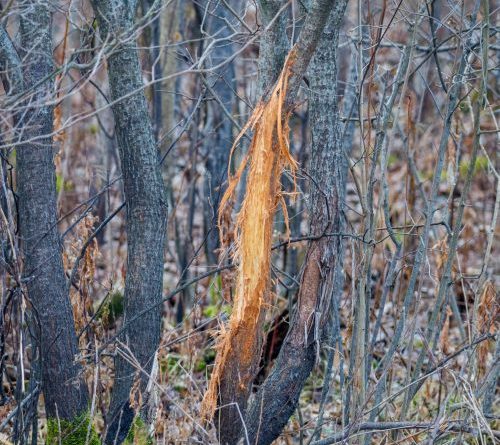
Every few days, another tree appeared shredded. Some were small saplings, while others were as thick as my forearm. The rubs were connecting several trails that funneled deer movement through a narrow strip of timber. Three days before opening day, I slipped into the area during a light rain and hung a stand east of the rub line.
A Hunt to Remember
Opening morning was quiet. A few squirrels chased each other through the leaves, and a pair of does wandered by, but no bucks appeared. Then I spotted a fresh rub.
I heard the slow crunch of leaves behind me. I turned carefully and caught sight of antlers moving through the brush. A mature eight-pointer stepped onto the trail. The buck stopped at the fresh cedar rub and lowered its nose to the ground. Then it worked the tree again, raking it with its antlers and stripping more bark from the trunk. After a minute, the buck turned and followed the trail towards me. He walked in front of me presenting me a broadside shot.
I settled my pin and released. The arrow found its mark and the buck whirled and disappeared. After about an hour of waiting and 150 yards of an easy track job, I found the deer near the creek. As I admired the buck, I thought about the rub line that had led me there.
The rubs hadn’t guaranteed success. They had simply revealed how deer were using the land. I had read the sign, trusted my scouting, and been in the right place when the moment arrived, but they were a part of the puzzle that I used for system I relied on to consistently find mature bucks.
Deciphering Rub Lines
Buck rub lines show up in late summer and fall when deer are active and starting to shift into fall patterns. They seem to pop up overnight, and a lot of times you will see these repeated year after year. Sometimes several small diameter trees makeup a straight line along a well-traveled deer path. When this happens, you can be sure they will hit them continuously. They’re used to mark their presence and leave scent. It is part of normal deer behavior and often happens along regular travel paths. One example is the edge of a pond that connects some bedding to a clover field. In late September, just about the time when the anticipation of the upcoming season is at an all-time high, the rub lines will pop up. They will continue to get “freshened up” throughout October and November.
Many hunters think a rub line is made by one buck moving in a straight path, but research and field work show it is not that simple. Rubs often come from more than one buck and build up over time in the same general area. What looks like a clean line is usually a mix of deer using the same edge, trail, or travel zone.
Studies and field data show rubs are most often found along habitat edges. These include field lines, creek edges, logging roads, fence rows, and shifts between thick cover and open ground. Bucks like these areas because they offer both food access and cover, and they are easy routes to move through.
For hunters, rub lines can be helpful, but they should not be used alone. Fresh rubs near food or bedding areas can point to a buck using that spot right now. Older or scattered rubs are less useful by themselves. Rubs work best when combined with other sign like tracks, trail camera photos, and feeding areas to help find where deer are moving.
How to Use Them
Once you find them, you know the bucks are visiting these rub lines. They might be doing it mostly at night. However, I have put a dominate buck lure on a drag and walked through these areas to a nearby stand. I’m playing on the buck’s aggressive nature and instincts to want to come and run other bucks off or spar. Pair this with some occasional grunting, and you very well could get an early season buck.
Scrapes
Deer scrapes in Iowa usually start showing up in late September, but they really pick up in early October. You will continue seeing scraping activity pick up as the rut approaches. This lines up with the start of fall changes and early rut behavior. Bucks begin making scrapes to leave scent and mark where they are moving. They also use them to check for other deer in the area.
A scrape is made when a buck paws the ground and clears a small spot down to bare dirt. Above it is often a low hanging branch called a licking branch. Bucks rub their face on this branch and urinate in the scrape. This leaves scent from several glands. It acts like a signpost for other deer.
There are two main types of scrapes. One is a hub scrape. This is a main scrape that many deer visit often. It is usually near travel routes like field edges, creek crossings, or trail junctions. These will be used year after year and are some of my favorite places to hunt. The other type is a satellite or secondary scrapes. These are smaller and more random. Bucks may hit them while moving through an area, but not as often as hub scrapes. They might be feeling aggressive and make a new scrape but not really come back and check it.
How to use Them
Hunters can use scrapes to find deer movement in early October. Many hunters use mock scrapes or scent near active scrapes. Some add doe or buck urine to keep deer curious. There is a lot of debate about whether to use synthetic scent, real scent, or start your own. Plenty of options exist today, like freezer-dried options, slow-release pellets, drippers and all sorts of options to help you disperse scents and keep mock scrapes active. There are tons of hunters with different experiences. Use what works well for you.
The best results come from light scent use and good placement near natural travel paths. You will have the best results at intersections of trails and along heavily traveled deer paths. Scrapes work best when they are part of a bigger pattern, not used alone.
In short, rubs and mock scrapes are signs that tell you bucks are in the area. You have to scout, get a plan, and hope it all comes together. Just because you see sign doesn’t mean that harvesting a buck is going to be easy. You have to be diligent about your scent control, the wind direction, when you hunt, and being stealthy when approaching and leaving your stand. Look for the sign, hunt it smart, and it can help you get a chance at buck.