
Training Your Gundog for the Field
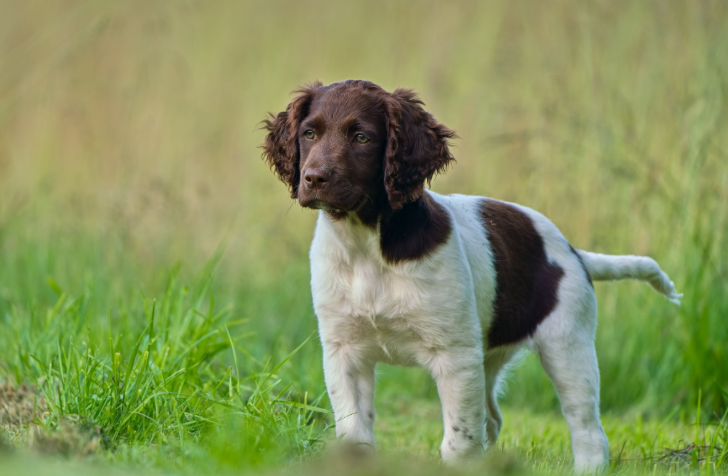
When Is My Puppy Ready For The Field?
A puppy’s readiness for the field is relative. To bring clarity to this article, I call any dog under the age of two a puppy. Large breed dogs are still developing mentally and physically until they are 16-24 months old.
So, if we identify any dog under the age of two as a puppy, when we ask the question, “When is my puppy ready for the field?” we have a clearer framework to answer the question.
Set Goals
To identify a puppy’s readiness for the field, we need to have in mind: their stage of life, the weather season (or current forecast), our end goals for them, and realistic expectations for the experience.
If we take an eight-week-old puppy out to a field with hip-high grass with the end goal for them to hold steady on point until the bird flushes, with the expectations that they quarter the field, covering twice as much ground as us, ignoring every new sight and smell, recalling when we call their name and holding point on the bird until we flush it, we’re out of our mind.
Likewise, if we neglect taking an eight-week-old puppy out to the field because we are fearful of overstimulating them or worried we’ll lose them or saying we’ll wait until they are bigger or fill in the blank, we’re missing out on an opportunity with our pup.
Keep it Real
Clear end goals for our gun dogs will help us establish training sessions with realistic expectations. For example, if we want our dog to recall, no matter what, that starts in the backyard “field” before we take them to a grass patch (even if the weather is cooperative and the grass is prime height for our pup).
We need to have end goals in mind, but they CANNOT be where we start. Rather, they are the picture on the puzzle box and our training sessions are the pieces that make that picture come to life. A 5000-piece puzzle takes time and patience to build. So does getting a puppy to their field readiness end goal. Be patient and set realistic expectations that you execute with your pup consistently before you add more expectations and move to the next steps.
Consider Weather
Keeping the weather in mind will help you make mindful decisions for field readiness training. For example, if you live in Iowa and you bring home an eight-week-old puppy in the middle of December, you more than likely won’t introduce them to the water until the spring (unless you’re experiencing a weather phenomenon).
Removing as many distractions as possible like high winds, extreme heat, super cold, and overly wet conditions when introducing your dog to the field or increasing your expectations will be in your favor. I’m not suggesting you can’t and/or shouldn’t train in all climates and weather patterns, but it is a good rule of thumb to have them in mind especially when you’d use the words “new” or “next” when you describe your training session.
Thinking of field readiness with your pup’s age in mind can help you establish a solid framework to execute your goals and expectations. The stages I’m going to share aren’t meant to be gospel, but rather an outline.
Early Socialization (2-3 months old):
Introductions should begin with natural cover, different types of terrain, water, and other outdoor conditions to help the dog grow comfortable in a variety of hunting environments. During this stage, the foundation of training should also begin, including basic commands such as sit, leash training, recall, and fetch.
Foundation (3-5 months old):
This stage should focus on strengthening the dog’s foundation with continued work on commands such as sit, heel, fetch, and recall. Hunters can also begin introducing the dog to more advanced situations, including water retrieves, birds, gunfire, and heavier cover to help build confidence and experience in the field.
First Hunt Prep (5-12 months old):
At this stage, training should increase in intensity with more realistic field scenarios, including simulated hunts on both land and water, along with bird searches and tracking exercises in a variety of conditions. Trainers should continue demanding consistency with foundational commands such as heel, sit, recall, and fetch while also introducing real birds and adding more hands-on field experience to further develop the dog’s confidence and skills.
Hunting Season/Seasoned Gun Dog (12-24 months old):
During this stage, trainers should focus on putting the finishing touches on the dog’s foundational obedience and overall expectations in the field. Work should also continue on steadiness, teaching the dog to remain calm and controlled through the flush, wing, shot, and fall. Most importantly, this is the time to enjoy the process, continue reinforcing training. Take every opportunity possible to get the dog into real hunting situations whether you’re in the field searching for pheasants, or patiently waiting for a group of mallards to come into your decoys.