
A Guide to Summer Catfishing
A Guide to Summer Catfishing
I can’t think of a better way to start the summer off than spooling up some mono on a baitcasting rod and rigging it up for some channel catfish. At one point in my fishing career, all I could think about was catching these smooth-skinned creatures.
We used to have an annual local catfish derby here in Fort Dodge that we all looked forward to each year. Even though the event has since ceased, the memories still live on. 2019 was a year I remember specifically as my team finally took the trophy that year.
We borrowed a boat, had a plan, and executed the plan perfectly. It was a grind to catch the size we were after, and time was running out. It was white knuckles headed to the weigh-in, and we just barely made it with only a minute to spare. My partner jumped out as we came to a stop, grabbed the bucket of fish, and hustled to the weigh-in. I don’t remember how much we went over the heaviest team that day, but it wasn’t by much. We celebrated the win for a while, taking turns displaying the trophy at each of our homes. It was a day we will never forget, including the good friend who loaned us the boat.
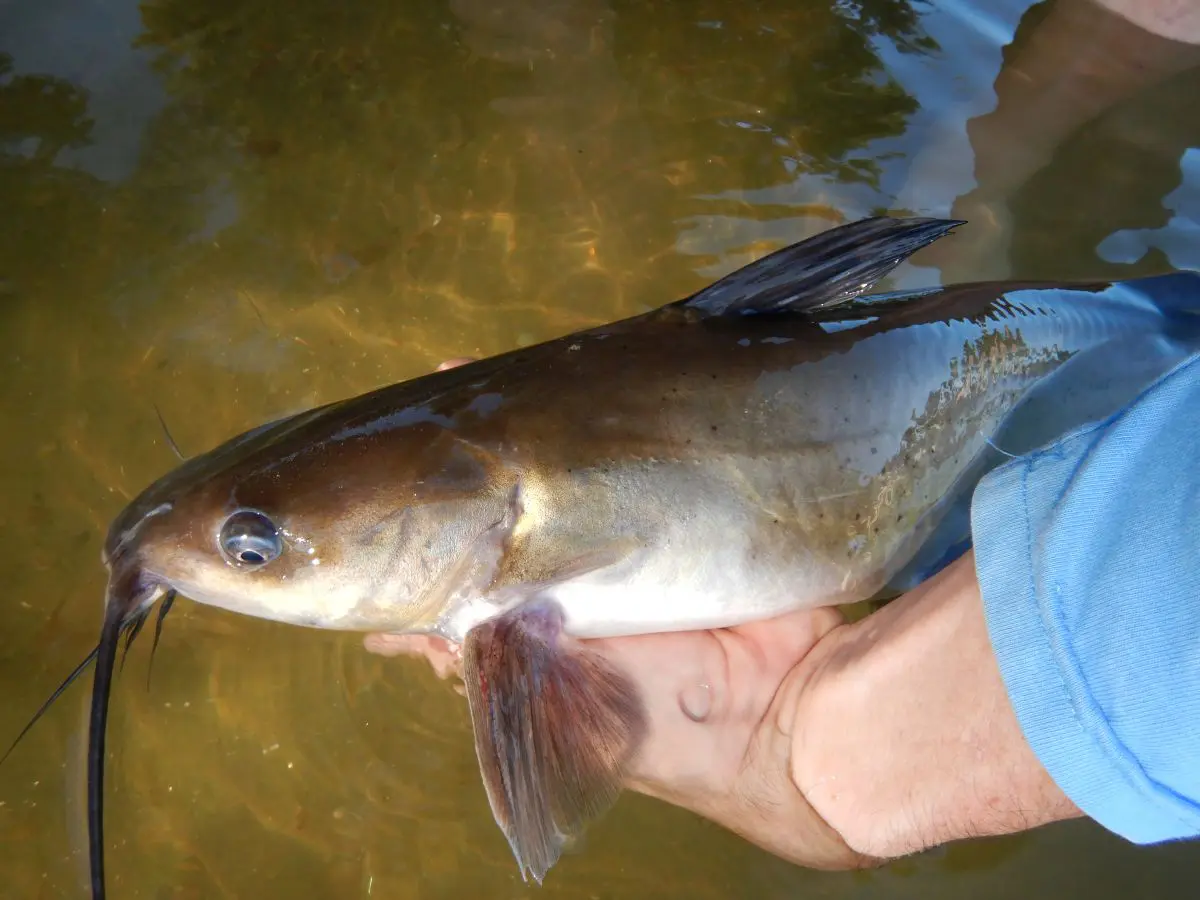
Catching catfish is a great way to enjoy the outdoors when it starts getting warm out. In June, the catfish are very active and can be caught fairly easily. In this article, I will cover channel catfish specifically. Channel cats get a bad reputation as a bottom-feeding fish, but they actually are an aggressive predator. If you have ever been to the Red River in Manitoba during the fall, using leopard frogs as bait, this statement may ring familiar to you. When a 20lb catfish decides it wants a leopard frog for a snack, it will fold over a stout fiberglass rod like a taco, making it hard to get out of the rod holder. Then the fight is on between you and the fish. Throw a little current in the mix, and it makes for a day full of excitement and a night with sore arms.
Find Them
When targeting catfish, the river is the first location that comes to mind. Most small and medium-sized streams can be broken down into 3 main categories: a riffle, a run, and a pool. A riffle is a shallower, rocky part of the river where the current moves more quickly. The run usually follows a riffle where the stream starts to get deeper and slows down a bit. The run usually makes up the majority of the river and will have an average depth. A pool is the deepest and slowest-moving part of the river.
Hard turns in the river can erode the riverbank, creating deep pools, but it is not the only place you will find pools. Sometimes a large boulder will have a pool directly behind it, created from a changing current direction as it flows around the rock. When searching for channel cats, I like to fish the runs and pools, although I have caught a fair number of channels in shallow water as they come up to feed in these rocky areas towards dusk.
Channels can easily be caught from shore or from a boat. Typical areas for them include log jams, current seams, cut banks, eddies, deep holes, and even hiding behind a single piece of structure sometimes. During the warmer months, you won’t have to land right on the fish in order to catch one. Catfish have an excellent sense of smell, and the moving water will help carry the scent downstream, leaving a trail for them to follow. Once they find the source of the smell, the catfish will then sometimes “taste” the bait with their body, as it is completely covered in taste buds. This is why setting the hook too soon can result in many missed fish. Leave that rod in the holder until it folds over and stays bent. You will know when the fish is hooked.
Hook, Line & Setup
Baitcasters and spinning reels will both land even a big channel cat, although I believe the baitcaster has more of an advantage. Mono is an excellent choice for line as it has some stretch when tangling with a big one. Line rating really depends on the situation, but I’d say 15-20 lb. test would be a good all-around choice.
For a rod, I like a good sturdy glass rod. Fiberglass rods are tough as can be and are not too stiff, which can help when fighting the unruly ones. When it comes to hooks, there is a wide variety, but I will narrow it down to just two. If you like to set the hook, choose a J-style hook. If you want to let the fish hook itself for the most part, choose a circle hook. When you use a circle hook, it is imperative that you let the fish load the rod completely and, at most, give the rod a smooth sweeping action to seal the deal. Jerking the rod quickly when a fish bites on a circle will result in missed fish most of the time. Hook sizes from 4/0-6/0 will cover most of your catfishing needs.
A simple Carolina rig works well for catfishing most of the time. This rig consists of a hook, 18-24” leader, swivel, bead (to protect knot), and a sliding sinker. For sliding sinkers, there are two options. Either a line through sinker, or a nylon sliding sinker clip with a snap attached to it. I’ve used both, and they work about the same, although the sinker slide can catch more debris on the snap at times. Weight could be anywhere from 1oz-8oz depending on current. I keep a wide variety of sizes on hand. Sometimes a peg float or a catfish rattle is added to the rig about a foot above the hook to keep the bait fluttering above the bottom or to make some noise.
Bait Matters
There are many baits that will take channels throughout the summer months. I will be mentioning my favorites and will be leaving the stinky ones out. Fresh cut bait is easy to find or catch and is one of my absolute favorites for channel cats. In Iowa, any legally harvested fish can be used for bait. This is a fact, not an opinion. I’ve used gills, crappie, and even walleye at times. With that being said, my preferred cut bait choices are quillback, redhorse, bluegill, and shad. It is important to note that fresh-cut bait outperforms rotten cut bait.
Live bait is equally effective for catfishing as well. Some examples are nightcrawlers, bluegill, crawdads, and frogs. One of these will outperform the others in most cases, as many cat fishermen know, and that is the leopard frog. For whatever reason, channel cats cannot resist these bouncy little creatures. The only problem is that they can be hard to find sometimes and even harder to catch.
Outsmarting Catfish
A good practice when using both types of bait is to check it frequently. If you haven’t caught a fish in 30 minutes or less, reel in and relocate the bait by casting to the left or right of where you were. If you have caught a fish, cast right back to where you were until you go 15-30 minutes without a fish. This is a good way to cover the whole area without moving. If you are using cut bait, it is a good idea to put on new bait each time you reel in and recast.
Now that I’ve covered some of the summer catfishing guide for river fishing, I think trolling would be worth mentioning. This is a great way to spend the day at the lake with family and friends. It’s almost as relaxing as an evening on the shore, but with a little chaos mixed in every once in a while. For this technique of catfishing, you can use the exact same rod, reel, Carolina rig, and bait as mentioned before, although I do suggest using the peg float when trolling. It will help keep the snags to a minimum. Trolling for catfish seems to be most effective for me in shallow, featureless lakes. Speed ranges from .3 to .9 mph, which is pretty slow.
For weight size, 1oz for every 10 feet of water is a good rule of thumb. If you are new to this method, I suggest only running 2 lines. A short line and a longer line. This will minimize the mess when you go through a good area, and both rods fold. With trolling, there is not much need to set the hook sharply. Just a nice steady sweep of the rod will do, as they usually hook themselves anyway.
Now that you’ve got the fever for a big channel cat, it’s time to get out there and give it a shot. Bring some extra tackle because bottom fishing almost always comes with some loss. If you plan to shore fish into the evening, don’t forget the firewood and some chairs. Cast the lines out, make some memories, and get some slime on the line!
June 2026
By Geoff Taylor
Give us a Follow on Facebook for Upcoming Issues and More!