Best Places for Early Season Open Water
Best Places for Early Season Open Water
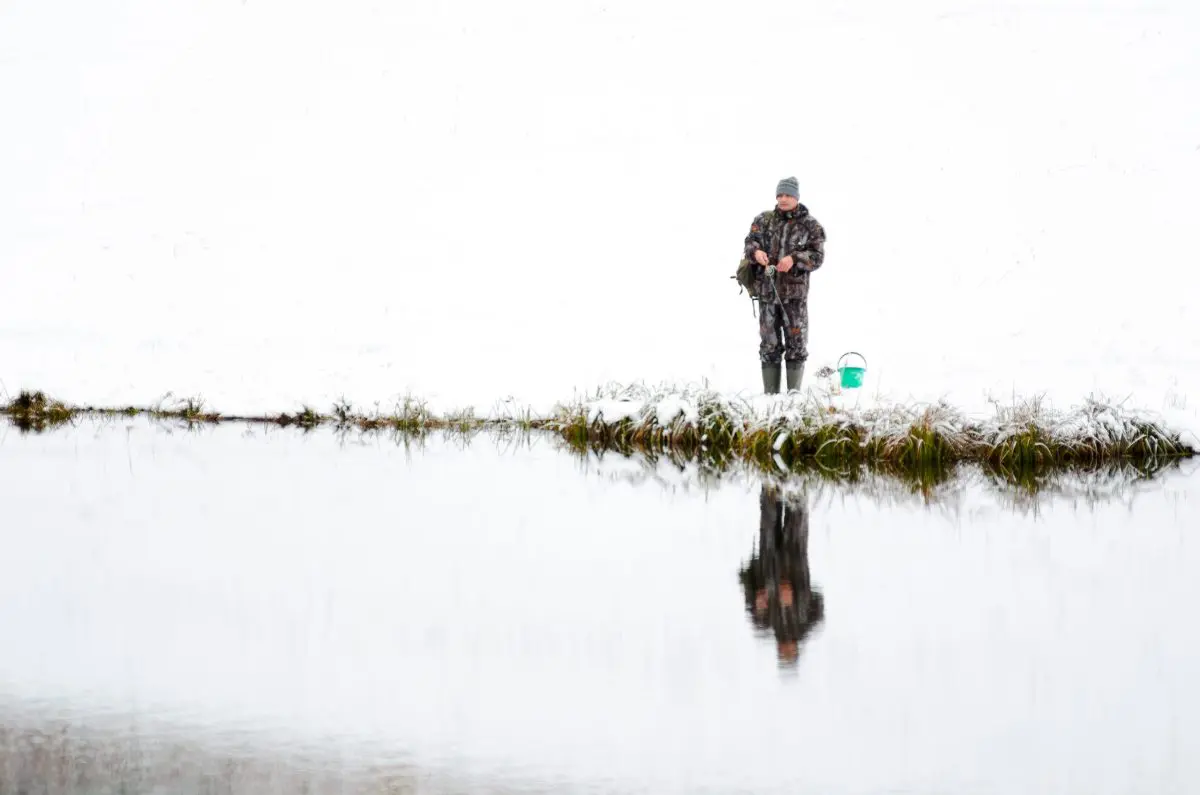
It’s time to start thinking about the open water season. Time to put away those short sticks and tiny jigs, and replace them with longer rods, bigger tackle boxes, and a fishing vessel if you own one. If a water vessel is not your thing, that’s ok because this is the time of year when wading has some significant advantages to catching these early spring fish. Besides, some of the best fishing spots are the most secluded ones, and we all could use a stretch of the legs after being cooped up all winter. As the days get longer and warmer, with average temps starting to get into the 50’s and 60’s we all start wondering where we are going to get that first bite.
Small Interior Rivers
Before we leave winter behind for the year, there is one more key observation to keep in mind. Open water pockets when the ice hasn’t let loose yet are an indication of warmer water. Take note of these pockets for when the ice goes out, as these can be incredible first starting points, especially for northern pike.
Bait will congregate in this warmer water, which is like a dinner bell for the Coldwater predators with teeth such as walleye and pike. The next place to look for after the ice is off the river is the deeper holes. Keep in mind, deep doesn’t always mean over 10’. If the average depth of the river you are fishing is 3’ and you find some 5’ deep water, you have found a deep hole. Some obvious locations for deeper holes can be an outside bend, cut bank, behind a large rock, or downstream from shallow riffles.
As for the not-so-obvious locations, with a pair of warm chest waders and a little time, you can also take a walk in the water when it is low to find the “secret holes”. Current seams also hold fish quite well, as they can be an excellent ambush point. The fish can hold in the slower water and dart out at anything swimming by. These can be some of the best locations to catch your fill of pre-spawn walleyes. So, what attracts the fish to these areas? Usually, the deeper water is a place of rest for these pres-pawn fish as they head towards the spawning grounds.
Tackle & Technique
Now that you’ve found the hole, it’s time to back away and fish it. If the water is still in the low 40’s, you’re going to want to start slow. Here are two ways to fish this scenario. A simple lead head tipped with either a nosehooked minnow or a plastic. Choose a jig size that applies to depth and current. Common sizes range from 1/32oz-1/4oz. You’ll want your jig to stay near the bottom, but not so heavy that you’re losing tackle. Gently cast your bait upstream from the hole and let it drift into the deep area with a slow lift and lower motion. If you feel a slight tick, wait a few seconds, reel up the slack, and set the hook. If you feel a distinct thump, set the hook right away cause your jig just got choked!
The next simple rig to try is a Carolina rig with a floating jig head. Slip a 1/8-1/4oz egg sinker above a swivel and tie on an 18-24” fluorocarbon leader with a floating jig head on the end of the line. With this rig, it’s best to use a nose-hooked minnow to give it a natural presentation. Flip this rig at the front of the deep water and let it settle in. Leave some slack in the line, as the fish will usually pick this minnow up gently. Watch for the line to tighten up and set the hook as soon as the line is tight. Work the entire area of the hole. As far as line this time of year, 6-8lb mono is a good choice on cold days when the air temp is freezing, and 8-10lb braid on warm days.
Exterior Border Rivers
Iowa has two major rivers that make up the east and west borders of the state. These rivers are much larger than the interior rivers and can be intimidating at times to someone wanting to shoot their shot at some of the best fishing in the state. They hold just about every freshwater species available in the state of Iowa. The dams on these rivers draw quite the crowd once the water is ice-free.
One way to get great access to fishing at one of the dams is to fish from one of the many fishing barges on the river. For a fee, you can enjoy a day of fishing just below the dam, usually along a current seam or in an eddy just away from the main current. The fishing floats sometimes have a place to warm up on cold days, a bait shop, a restroom, and a grill to cook some food. It’s always a good idea to call ahead of time to see how the bite has been, as it can be affected by water flow when the dam gates are let down and put up.
If party fishing isn’t your thing and you have a boat, there are several boat ramps along both rivers. Always be aware of currents when fishing near the dams. Downstream from the float is a good starting point for vertical jigging. For vertical jigging these areas, whether on the float or in a boat, it’s pretty straightforward. Jig and plastic, hair jigs, and jigging spoons are the most commonly used. Weight ranges from 1/2oz-1oz depending on current and depth. A simple yo-yo technique to make contact with the bottom can be effective, as well as snap jigging, when they are on a reaction bite.
Ponds
With the river usually being the first thought to a fisherman’s mind come early spring, the ponds can sometimes get overlooked. These bodies of water can provide some of the best fishing opportunities during this time as they are typically shallower, smaller, and warm up faster. Few things get an outdoorsman more excited than that first thump of a crappie or a bluegill pulling that bobber under. Crappie should be starting to move shallow by late April to early May in these warmer waters, and the bluegills won’t be far behind them.
Look for shallow weedy areas just off a break if possible. The fish will frequent these areas to feed on bugs and small fish as they get ready for the spawn. A light jig and plastic can be deadly for those prespawn crappie.
Once you find the school, slow roll your bait over them and be ready for that thump. For bluegills, the old go-to bobber and worm can keep anyone busy for hours. Try a slip bobber and adjust the depth until you find what their preference is. Keep it simple with a split shot and a small hook with a pinched-off chunk of crawler. If you like to be a little more active, a Texas-rigged worm is sure to catch the eye of a largemouth lurking nearby. The best part about fishing ponds is that the memories made will last a lifetime. It’s a great way to get the whole family involved for a day of smiles, learning, and laughter. Also, don’t forget to take pictures!
Lakes
When it comes to lake fishing, there are countless options when the water starts to warm up, and all of the fish start to get really active, but what happens before that? There is a short window of opportunity for catfishing just after ice out that doesn’t get talked about as much as it should. Yes, you read that right, ice out catfishing. Right after the ice comes off the lakes and reservoirs, can be some of the best catfishing of the early open water season.
Location is key for this bite, and it pays to play the wind. There are 3 main ingredients in this recipe that can make for a stellar day from shore. Shallow warm water, wind, and dead fish. Find a shoreline that has been windblown for a few days (preferably a south wind against a north shore) and chuck out a piece of cut bait or dead shad. A simple sinker and hook setup will work for this method. If the fish are there, they won’t be shy. This is where they will be swimming around, eating all the dead fish that have been preserved in the ice all winter. Starting out the open water season with a fat cat to pull your string is about as good as it gets and will set the tone for an amazing open water season!
Preparation
Some things to keep in mind as you prepare to get out there and bend the rods. Check your gear and make sure it’s in working order before you head out. Fresh fishing line is always a good idea when starting a new season. Watch the weather. Spring weather in Iowa can be drastic at times. Always dress for the weather. Keep a raincoat and warm clothes on hand. Bring a buddy when wading. An extra set of eyes and hands could save your day, especially when wading through cold water if there is still ice moving. Make sure to check the regulations for the current season if you are planning to harvest fish, as the size and bag limits vary across the state.
Regardless of how you choose to start the season, it’s all about enjoying the time you get to spend outdoors. Catching fish is just a bonus. If you learn one thing each time you go out, you have succeeded. Keep your hooks sharp, your line tight, and put the point to them.
April 2026
By Geoff Taylor
Want to stay up to date on the Cattle Industry and Auctions going on check out