
5 Historic Places to Visit in Iowa
5 Historic Places to Visit in Iowa
Iowa was officially established as the 29th state on December 28, 1846. Our state is still full of fun historical places to visit. Each county has its own historic place or building preserving the heritage that helped shape our state. Iowa’s landscape is dotted with historical landmarks that tell the story of pioneer history and the cultures that have shaped our state. We have picked 15 place to take a look at, out of the hundreds of historic places, buildings, and landmarks.
Burr Oak House / Masters Hotel
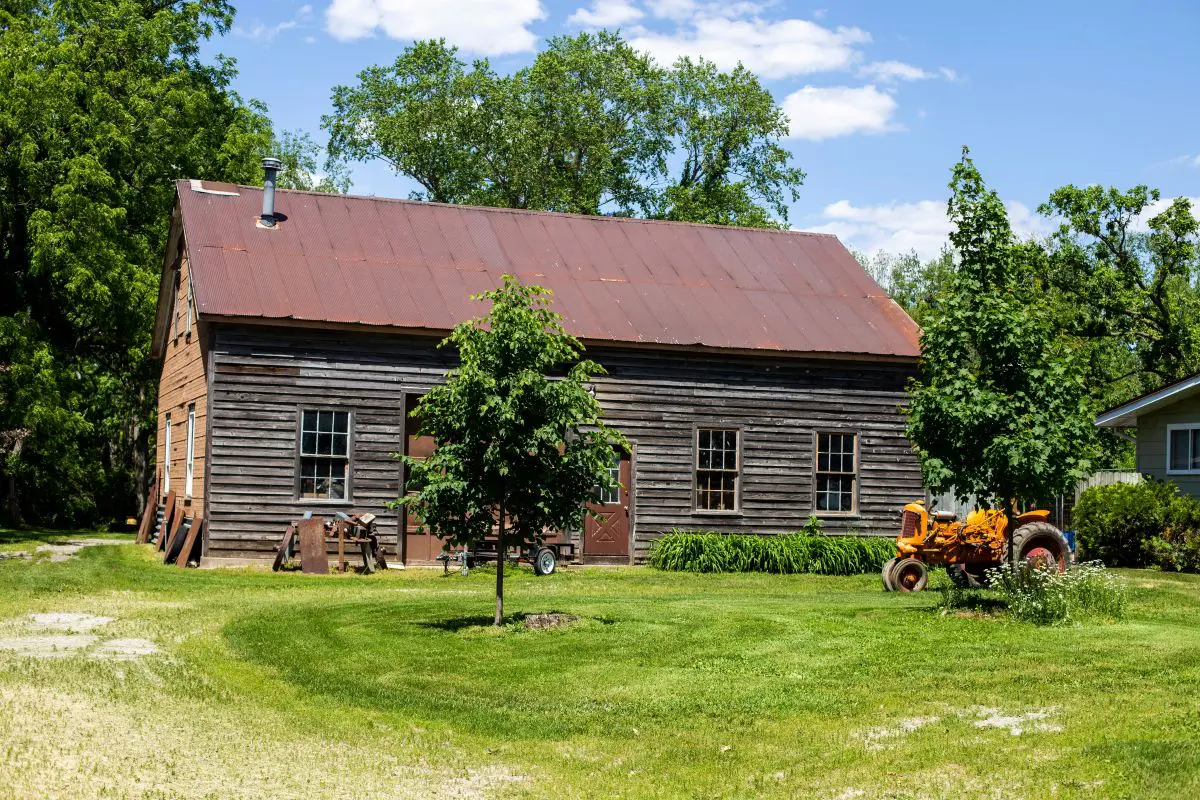
First off is the place that inspired this article. Aaron McKinney, the publisher of this magazine, shared with me that in Burr Oak Iowa, there is a hidden gem as it was once a place that Laura Ingalls Wilder lived. Burr Oak is located in the northern part of the state, and is the childhood home of Laura Ingalls Wilder in 1876. This site allows fans to see the way she and her family lived. This part of her adventure is not featured in her books. You can take a guided tour of the hotel to see where the family lived and worked, explore the nearby 1915 Pot Hollow Schoolhouse, or walk along Silver Creek where Laura used to play.
Amana Colonies

The Amana Colonies in Amana, Iowa are probably one of the most popular historic areas in Iowa. The Amana Colonies represent one of America’s longest-lived settlements and are made up of seven villages. Their history began in 1855 when the Community of True Inspiration, a German group, moved from New York. For nearly eighty years, the residents lived a completely communal lifestyle where no one received a wage, and all necessities like food, housing, and healthcare were provided by the community. This system remained intact until 1932.
Today, visiting the Amana Colonies feels like stepping into a blend of living history and modern craftsmanship. You can begin your exploration at the Amana Heritage Museum, which uses several historic buildings to illustrate how the colonists lived and worked during the communal era. The High Amana General Store still has its original 19th-century fixtures and traditional goods. You can tour the Amana Woolen Mill to see fabrics and textiles being made on looms that have been in operation for over a century, or visit the Amana Furniture Shop to watch craftsmen make heirloom pieces by hand. These shops continue the tradition of self-sufficiency and quality that the original settlers established. Finally, you can’t skip the food here! The family-style dining remains a staple of the experience.
Effigy Mounds National Monument
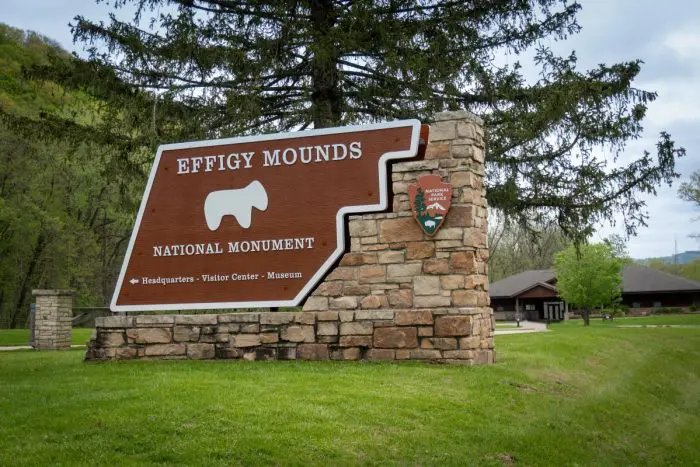
Next, in the far eastern part of the state are the Effigy Mounds. This site is in Harper’s Ferry, Iowa, preserves over 200 prehistoric mounds built by Native Americans for ceremonial and religious purposes. The mounds are unique because they’re constructed in the shapes of animals like bears and birds. In 1949, President Harry S. Truman established the site as a National Monument. When you visit today, you’ll want to walk the hiking trails. There are 14 miles of hiking trails that wind through timber and prairie. They give you overviews of the mounds and the Mississippi River Valley.
Snake Alley
Snake Alley, located in the city of Burlington, is famously recognized as one of the most crooked streets in the world. It’s been featured on TV, commercials, and in media. Its history dates back to 1894 when it was being built by German immigrants. They wanted to create a more manageable path for horses and buggies to manage the steep hills. To assist horses with their footing on the sharp incline, the builders used locally fired blue clay bricks laid at an angle, though the street ultimately proved so difficult for upward travel that it was eventually designated as a one-way path heading downhill.
Maquoketa Caves State Park
Maquoketa Caves State Park, located near Maquoketa, Iowa, is famous for having more caves than any other state park in Iowa. While the park is a favorite for hikers and nature lovers, its history stretches back thousands of years.
Archaeologists believe the caves were used as shelters by prehistoric people even before Europeans came to the Americas. Artifacts found within the cave systems indicate that these spaces were vital for survival during harsh winters.
Iowa has plenty of limestone, and the landscape was formed by the erosion of limestone over years, resulting in the existing caves and the Natural Bridge, which towers 50 feet above the valley floor. The area is full of history and is also a fun place to hike and explore. You can see stalactites and stalagmites in the caves too.
These are just 5 of the many historical places in Iowa. Iowa’s history began with ancient native culture, preserved through the Effigy Mounds and Maquoketa Caves. This spring is a great time to get out and enjoy our state, nature, and its history.
March 2026
by Jessica Graham
For Leading Dairy and Cattle Industry News: