
Five Easy Tips to Find More Antlers
Five Easy Tips to Find More Antlers
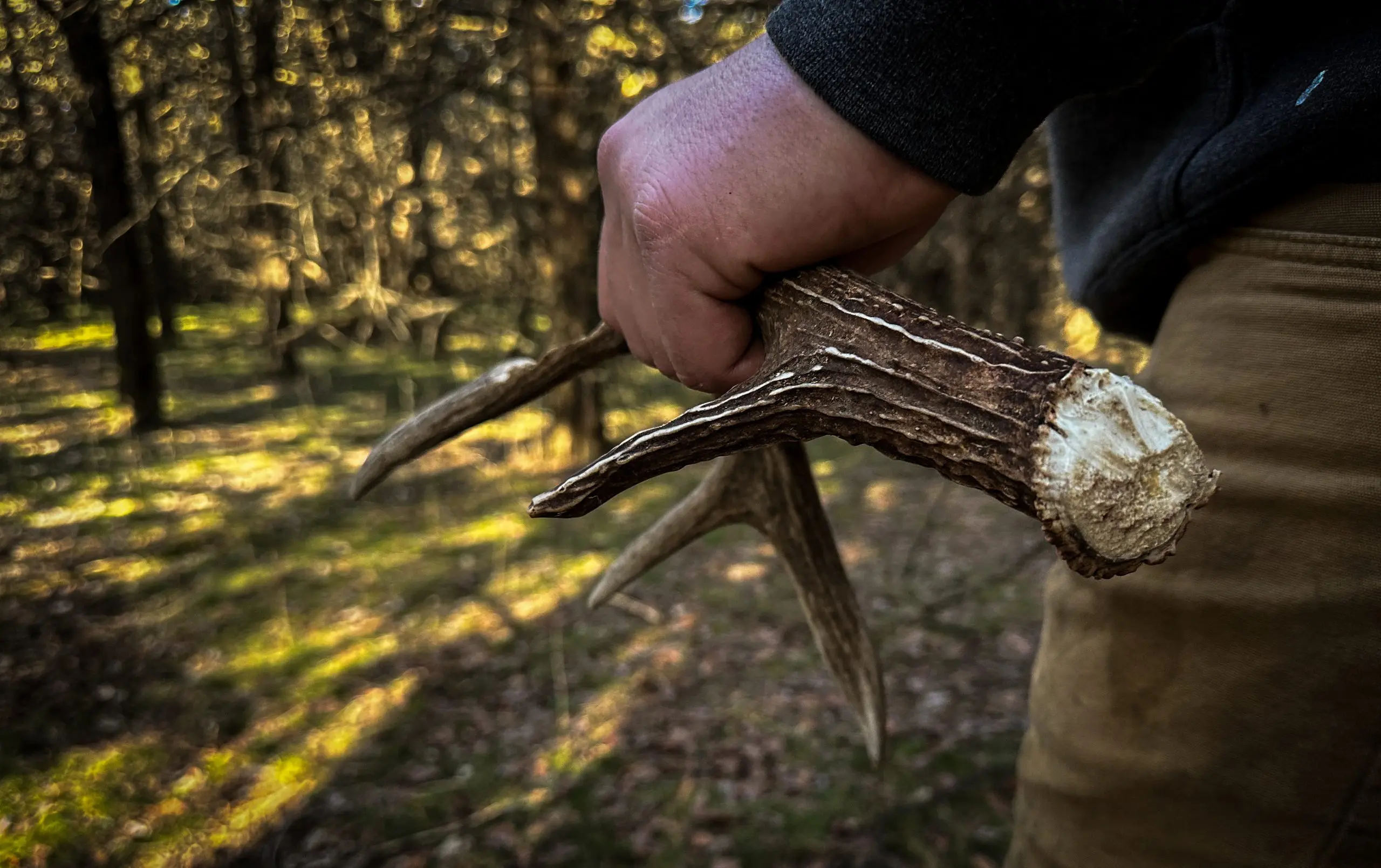
The hunting season might be over, but the real fun in the woods is just beginning if you ask me. If you’ve never tried shed hunting, you’re missing out on a serious adventure. It’s like a treasure hunt in the woods. It’s also one of the best ways to figure out where those big Iowa bucks are hanging out right now. Sheds tell us a story, and there isn’t much more exciting than finding sheds of a trophy, then trying to pin-point and hunt that buck the next fall.
The sweet spot for finding antlers in Iowa is typically January and February, right after the stress of winter. Of course, they can and do shed them earlier, but for the most part, the majority of sheds will drop in January and February. The bucks drop those racks when their testosterone levels drop. If you’re ready to find some antlers, here are my five go-to strategies for a successful shed season.
Reflect on Winter Weather
Timing is everything in shed hunting, and you need to think about the past few weeks, and let the weather dictate where you look. Deer are all about energy conservation in the winter; they are basically just trying not to freeze to death.
When it’s brutally cold and windy, deer are tucked deep into whatever spots offer the best protection. I find deer bunched up in steep ditches trying to get out of the wind on these days. You need to focus on thick cedar thickets, dense pines, or down in those deep ditches where they can get completely out of the wind.
When you get a mild, sunny day, then this goes out the window and the game changes. The deer will move out of the thick stuff to soak up some sun. Head for the south-facing slopes in the timber; the sun hits those hillsides and warms them up. I’ve also seen deer laying in fence rows during sunny days trying to soak up the heat.
By thinking about the weather during January and February, you can decide whether you’re searching the sunny hillsides or the deep, dark thickets.
Check Bedding Areas
Bedding areas are probably the most crucial spots on your map. A deer spends most of its day lying down, digesting food and resting. Antlers can fall off mid-stride, but they often pop off when a buck stands up suddenly or shifts around while lying down.
You’re looking for those super-secluded spots the deer use for thermal cover, like areas with heavy brush and thick cedars. When you find a likely bedding area, slow way down and search it meticulously. Finding a shed lying right next to a fresh bed is a common experience and a huge rush.
Walk Food Sources
After months of chasing does and dealing with winter stress, bucks are starving. Their entire universe right now revolves around getting food and saving energy. This means they are constantly traveling between where they sleep and where they eat.
Focus your energy around major food sources, especially harvested corn and soybean fields. The travel trails leading from the thick cover to the edge of those fields are high-traffic areas. They settle back into predictable habits and the repeated walking and movement along these “deer highways” is a good spot for an antler to drop. Walk the fencerows and field edges very slowly, as the antler might be right where they jumped into the field. If you can find bedding areas around food plots, these are sure to have antlers in them, at least at one point.
Pinch Points & Staging Areas
Any place a deer spends some time is a place where they can potentially drop their antlers. At one time, we thought of antler shedding like a loose tooth. We thought jarring motions would knock them off. However, we now have learned that once testosterone drops below a certain point, that triggers the antlers to fall off. So, focus on heavily traveled deer paths and popular crossings. We know bucks like to look at a field for a while before they enter it to deem it safe. So, check staging areas, and areas they’ll stand and spend some time prior to entering the field.
On a different note, sometimes a buck will stand and look around before jumping a fence or crossing a creek, and usually these areas are the paths of least resistance. Several trails are funneled to the area of fence that is lower or clipped, or the area of a creek that has shorter, shallower banks. This means, there is potential for more deer to walk through this area. Again, you want to think about their travel in the winter, not necessarily what they were doing in the fall. So, where you saw them while bow hunting in oak timbers may not have the amount of sheds you’re hoping to find.
Be Patient
Shed hunting is tough on the eyes and the brain. Antlers are masters of camouflage, especially lying in a pile of brown oak leaves or dry grass. You can’t just go for a brisk hike and expect to trip over them.
The key to success is moving slowly and being incredibly thorough. Train your eyes to stop looking for a whole antler and start looking for the shape of a beam, the curve of a tine, or that tell-tale white color against the brown forest floor. Sometimes I’ll walk a grid one way, and then walk back the other way just to catch the different angle of the sunlight. Bring binoculars to scan ahead into the thick stuff you can’t easily walk through. Persistence really is the secret weapon here. I used to walk an area once and believe I was done, Iowa Sportsman writer Kend Boucher gave a great tip about going back and re-checking bedding areas to pick up new sheds.
Get out there, enjoy the quiet of the winter woods, and happy hunting!
February 2026
For Leading Cattle and Dairy Industry Information: