Hunting Late Season Roosters
Hunting Late Season Roosters
The diesel pickup rumbled down the county road, snow swirling in the headlights. December in Iowa meant the end of the season was coming, and the weather had finally turned nasty Beside me sat Gunner, my two-year-old German Shorthaired Pointer vibrating with energy in the passenger seat. Now, it is about getting a bird or two for the freezer before the real winter locked everything down.
We parked near a shelterbelt lining a field of corn stubble. Gunner exploded from the truck, a white and orange blur hitting the foot of snow. The dog worked the field hard, nose to the ground, moving with frantic, modern efficiency. I followed, the snow creaking under my boots. We moved toward a dense thicket of cedars and multiflora rose, the kind of nasty cover pheasants loved when it was this cold. Gunner’s pace tightened immediately. The dog went from a run to a careful, creeping walk. Gunner locked up, a perfect, rigid point, staring deep into the mess of brush. I moved in, kicking at the tangle.
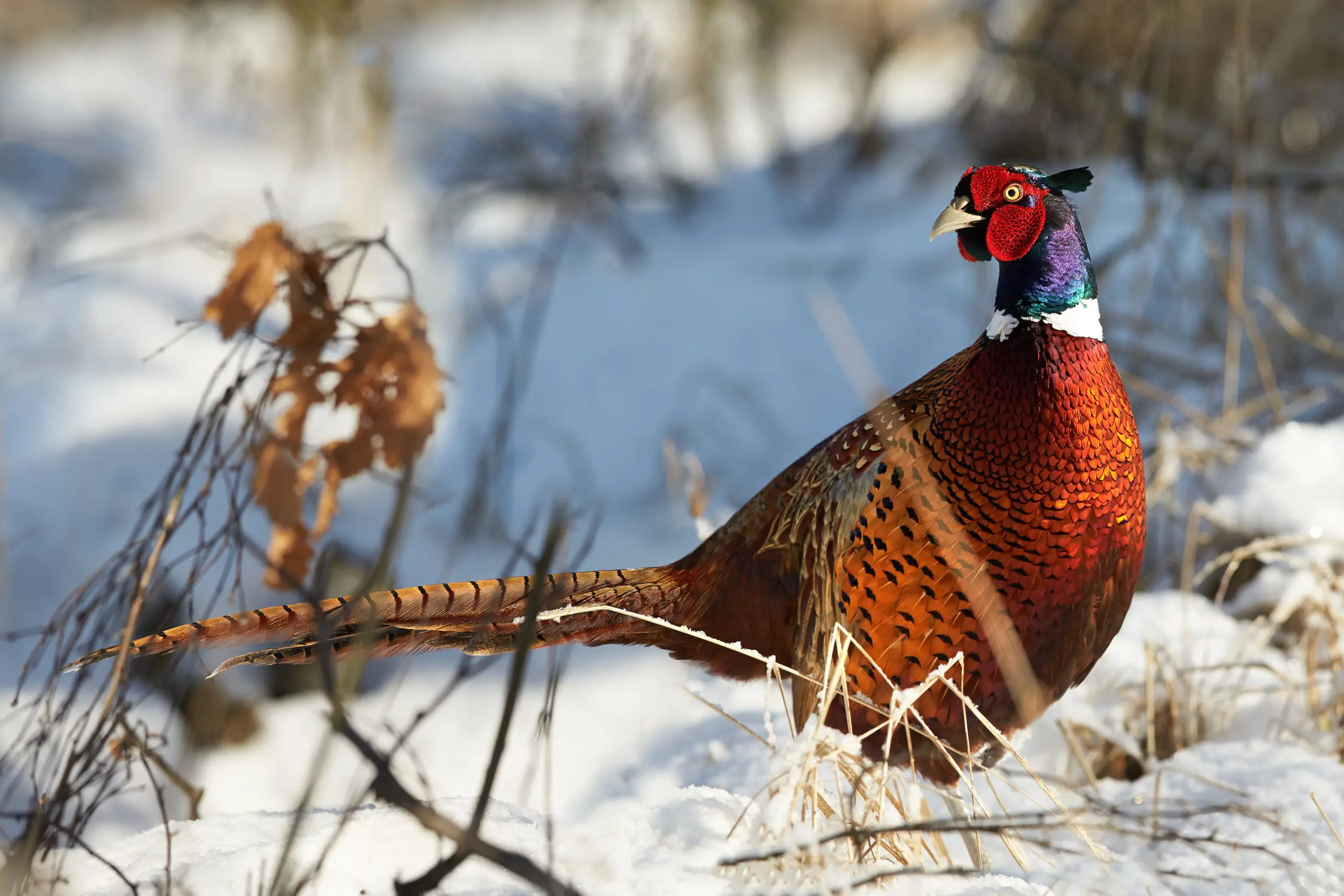
A rooster blew out of there, cackling, loud, and flushing straight up. I shouldered the gun, the familiar weight coming to my cheek in one fluid motion. Squeezed the trigger as the gun went off. The bird tumbled, hitting the snow with a dull thud. Gunner raced in and scooped up the bird, bringing it back instantly, tail wagging a mile a minute.
We turned back toward the truck, the snow starting to fall heavily now. The single bird felt like a victory, a solid win that might be the last for the year. I had my dinner, and Gunner and I had done our job. As we climbed back into the warm cab, I plugged my phone into the charger, already planning the drive home.
Not all hunts go as smooth as these, and sometimes we don’t know we’re on our last hunt for the year. There are a few tips that Gunner and I have picked up over the last few years when trying to get the last of the educated and wary roosters.
To successfully hunt wary late-season pheasants in the snow in Iowa, focus your efforts on prime winter habitat that offers thermal cover and nearby food sources, and adapt your strategies to account for the birds’ increased wariness and the harsh conditions.
Be Stealthy and Quiet
One of the first things Gunner and I did when we arrived to our destination was practice being quiet while we were getting ready. This begins with shutting the door quietly, and includes keeping an excited 2-year-old dog calm. Late-season birds associate human noise (like slamming truck doors or loud talking) with hunting pressure, and will flush wild or run long before you’re in range. Plan your hunt quietly and if you bring a buddy, use hand signals where possible to prevent talking.
Hunt Into the Wind
Approaching from downwind allows the scent to be carried toward your dog and your sound away from the birds, increasing the chance of a close-range flush. The wind doesn’t always line up, and can change with the terrain. If you can, keep the wind in your faces to give your dog the best chances of winding a pheasant.
Use Strategic Patterns
During cold and snowy days, especially with low pressure, pheasants often hold tight, hoping the danger will pass. Walking slowly and then pausing every few steps can make a nervous bird lose its nerve and flush. One thing I’ve found to work well is to walk slower than in the early season. Heavy cover and snow can make birds hold tighter, so a methodical pace with some pauses gives your dog time to work the scent and can force close flushes.
If hunting with a partner or group, have a “blocker” position themselves quietly at the far end or corners of a strip of cover. Pressured pheasants often run ahead instead of flying, and the blocker can intercept them. This can be a good strategy if hunting pressured public land.
While midday hunts are good for finding birds as they move to feed, the last hour before sunset is often the best as pheasants move from food sources back to their dense roosting cover.
Key-in On Habitat
Focus on the thickest, stiff-stemmed cover available, as pheasants need protection from wind and cold to conserve energy. Look for cattail sloughs and marshes (especially on the downwind side, where snow may be “canopied,” leaving open areas underneath for tunneling and cover.
Dense shelterbelts or windbreaks of evergreens, cedars, or plum thickets can have hidden pheasants huddled underneath. Also, native grasses like switchgrass and Indiangrass that stand up well to snow can hold pheasants. Don’t move too quickly through these structures.
Another thing to consider is the distance habitat is to food sources. Birds won’t be far from food in the winter. If you can, find some of the cover mentioned above close to unharvested or recently harvested grains like corn, milo, or soybean fields. Cover with food nearby has a dynamite combination for wary roosters.
If you’re hunting pressured birds, they’re getting wise. On public areas that are hunted hard, the obvious areas have been hunted repeatedly. Avoid easily accessible spots near roads or parking lots. Use aerial maps to find areas that require a longer hike, as these will likely have less hunting pressure and more birds.
Field edges, ditches, and brushy fencerows or heavy weed cover, can hold birds moving between food and roosting spots. Fencerows in particular have produced some good birds for me.
If there is a fresh blanket of snow, now is a perfect time to scout for sign. Look for tracks in the snow, droppings, and feathers to confirm recent bird activity before committing to an area.
Trust Your Dog
This is probably one of the most important pieces of advice, but if you’ve put in the time to work your dog and train him, then trust him. A good hunting dog is invaluable in locating and retrieving pheasants in thick, cold cover. Follow their lead, especially when they indicate scent. Yes, they can get distracted, but they want to do a good job and have some instincts too. These things have helped me bag a couple of wary, late-season roosters. I hope you find success this December too.
By Justin Marshall
For the Issue of the Iowa Sportsman January 2026, check it out below.
For Industry News in the Cattle and Dairy Industries